Jump to KiwiCo Crates by Age ↓
If you’re searching for KiwiCo reviews, chances are you’re asking yourself one big question:
Is KiwiCo actually worth the money?
As a mom, I completely understand.
You want your toddler to have meaningful things to do. You want more than simply turning on the TV when they’re bored. You want opportunities for them to play, explore, create, and learn.
But there’s one problem.
Planning activities for toddlers can feel like another full-time job.
You have to find an idea.
Make sure it’s appropriate for their age.
Gather the supplies.
Set everything up.
And then, of course, clean up afterward.
As a former elementary education teacher, I’ve always believed that children learn incredibly well through hands-on experiences. But as a mom, I also understand that not every parent has the time or energy to plan a new activity every single day.
That’s what made me interested in KiwiCo.
KiwiCo offers hands-on activities designed to encourage children to explore, build, create, and learn through play.
But is it actually worth adding to your family’s budget?
Let’s take a closer look.
Affiliate Disclosure
This post contains affiliate links. As a KiwiCo affiliate partner, I may earn a commission if you make a purchase through links on this page, at no additional cost to you. I only share products and resources that I believe may be helpful to my readers and relevant to helping children learn through play.
What Is KiwiCo?
KiwiCo creates hands-on activity kits designed around children’s ages and developmental stages.
The biggest benefit for parents is convenience.
Instead of spending your time searching Pinterest for an activity, running to the store for supplies, and trying to figure out what your toddler might actually enjoy, KiwiCo provides activities and materials designed to make hands-on play easier.
For busy parents, that’s the appeal.
Less planning. More opportunities to play.
👉 Explore KiwiCo’s activities and crates here.
KiwiCo is one of the many learning resources parents can explore when looking for fun and meaningful ways to support learning through play. If you’re wondering what other types of learning resources are available for toddlers, I created a complete guide to help you explore your options.
→ Read my complete guide to Learning Resources for Toddlers
Which KiwiCo Crate Is Right for Your Child?
If you’re trying to figure out which KiwiCo crate is right for your child, here’s a quick guide.
| KiwiCo Crate | Age | Main Focus | Best For |
|---|---|---|---|
| Panda Crate | 0–36 months | Explore & Discover | Babies & toddlers |
| Koala Crate | Ages 3–6 | Play & Learn | Preschoolers |
| Kiwi Crate | Ages 6–9 | Science, Art & More | Elementary-age kids |
| Atlas Crate | Ages 6–12 | Geography & Culture | Curious explorers |
| Doodle Crate | Ages 6–12 | Create & Craft | Creative kids |
| Tinker Crate | Ages 9–12 | Science & Engineering | Young builders |
| Maker Crate | Ages 12–100 | Art & Design | Older kids & adults |
| Eureka Crate | Ages 12–100 | Engineering & Design | Older kids & adults |
The ages and focus areas above reflect the KiwiCo crate options currently listed by KiwiCo.
For families with babies and toddlers, the Panda Crate is the option I’d pay the closest attention to because it is specifically listed for children ages 0–36 months.
For preschoolers, the Koala Crate is the age-appropriate option.
Panda Crate: Ages 0–36 Months
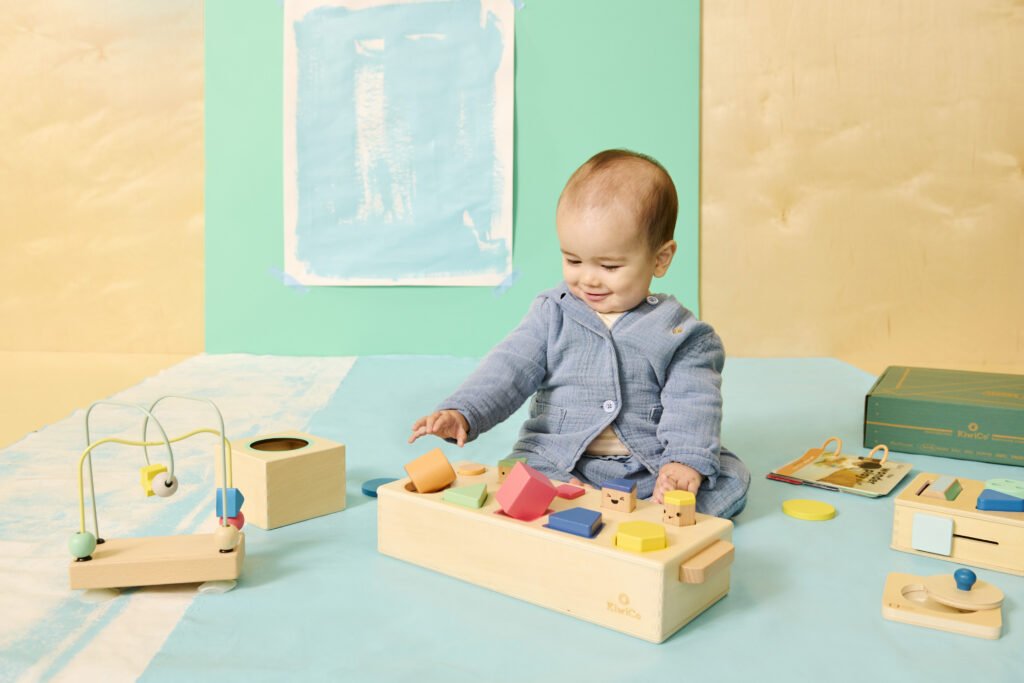
Best for: Babies and toddlers
Focus: Explore & Discover
If you’re looking for KiwiCo options for a younger child, the Panda Crate is the one you’ll want to look at first.
The Panda Crate is designed for children from birth through 36 months, making it the KiwiCo option most directly aligned with the baby and toddler years.
For this age group, I love the idea of focusing on exploration rather than expecting a child to complete an activity perfectly.
Toddlers are naturally curious.
They want to touch things.
Move things.
Open things.
Put things together.
Take things apart.
Try something again.
And sometimes do the exact opposite of what we thought they were going to do. 😂
That’s part of learning.
What Can Toddlers Practice Through Hands-On Play?
Hands-on activities can give young children opportunities to practice:
- Fine motor skills
- Cause and effect
- Early problem-solving
- Sensory exploration
- Language
- Coordination
- Curiosity
- Creativity
And you don’t have to turn the activity into a formal lesson.
You can simply play alongside your child and talk about what they’re doing.
Try questions like:
“What do you think this does?”
“What happens when you move it?”
“Can you find another one?”
“What should we try next?”
The goal isn’t to test your toddler.
The goal is to encourage curiosity.
Koala Crate: Ages 3–6
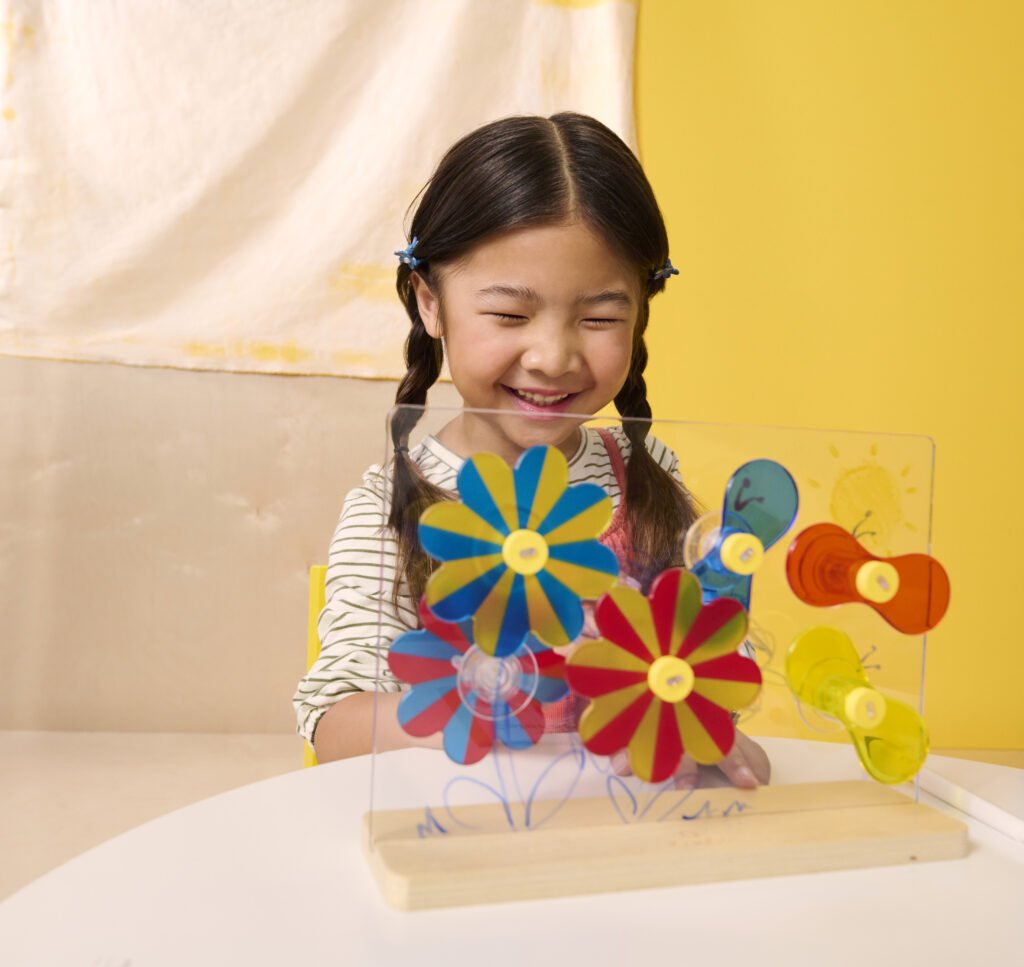
Best for: Preschoolers
Focus: Play & Learn
Once your child reaches the preschool years, KiwiCo’s Koala Crate is designed for ages 3–6.
This age brings a whole new level of curiosity.
Preschoolers are asking questions constantly.
Why?
How?
What happens if…?
And hands-on activities can give them opportunities to actually explore some of those questions.
What Can Preschoolers Practice?
Activities for this age can encourage:
- Creativity
- Problem-solving
- Fine motor skills
- Early STEM concepts
- Imagination
- Following directions
- Observation
- Independent thinking
And this is an age where I especially love allowing children to put their own spin on an activity.
You can introduce an idea without requiring your child to do everything exactly the way you would.
What About the Other KiwiCo Crates?
While Panda and Koala are the crates most relevant to babies, toddlers, and preschoolers, KiwiCo offers several other options for older children.
Here’s a quick look at what each one focuses on.
Kiwi Crate: Ages 6–9
Focus: Science, Art & More
Kiwi Crate is designed for elementary-age children and combines hands-on activities with science, art, and other learning experiences.
Children at this age are ready for more complex projects and can begin exploring concepts in greater depth.
Great for: Curious kids who enjoy creating, experimenting, and learning how things work.
Atlas Crate: Ages 6–12
Focus: Geography & Culture
Atlas Crate introduces children to geography and different cultures around the world.
This can be a fun way to turn learning about the world into something tangible and hands-on.
Great for: Kids who are curious about different places, people, and cultures.
Doodle Crate: Ages 6–12
Focus: Create & Craft
Doodle Crate focuses on creative projects and crafting.
For children who love making things, this type of activity can provide opportunities to practice creativity while learning new techniques.
Great for: Creative kids who love art and making things with their hands.
Tinker Crate: Ages 9–12
Focus: Science & Engineering
Tinker Crate is designed around science and engineering for older children.
This is where hands-on learning can become more complex, with children exploring how things work and solving increasingly challenging problems.
Great for: Kids who love building, experimenting, and figuring out how things work.
Maker Crate: Ages 12–100
Focus: Art & Design
Maker Crate is designed for older kids and adults who enjoy art and design.
It offers opportunities to create more advanced projects and explore different creative techniques.
Great for: Older kids, teens, and adults who enjoy hands-on creative projects.
Eureka Crate: Ages 12–100
Focus: Engineering & Design
Eureka Crate focuses on engineering and design for older children, teens, and adults.
It’s geared toward people who enjoy building, designing, and understanding how things work.
Great for: Older kids and adults who enjoy engineering and problem-solving.
What Does Each KiwiCo Crate Help Children Practice?
One thing I always encourage parents to think about when choosing an educational product is this:
What is my child actually doing?
I don’t think something becomes educational simply because the word “educational” is printed on the box.
The real value comes from the experience.
Are they experimenting?
Are they creating?
Are they solving a problem?
Are they making decisions?
Are they using their imagination?
Are they talking about what they’re doing?
Those are the moments that make play meaningful.
Panda Crate
Exploration • Fine motor skills • Sensory experiences • Early problem-solving • Cause and effect
Koala Crate
Creativity • Problem-solving • Early STEM • Fine motor skills • Imagination
Kiwi Crate
Science • Art • Creativity • Problem-solving • Critical thinking
Atlas Crate
Geography • Culture • Curiosity • Observation • Global awareness
Doodle Crate
Creativity • Art • Fine motor skills • Design • Self-expression
Tinker Crate
Science • Engineering • Problem-solving • Critical thinking • Building
Maker Crate
Art • Design • Creativity • Hands-on skills • Self-expression
Eureka Crate
Engineering • Design • Problem-solving • Critical thinking • Building
You Don’t Have Time to Plan Everything?
I think many of us want the same thing for our toddlers.
We want them to:
- Explore
- Create
- Problem-solve
- Use their imagination
- Practice fine motor skills
- Learn new things
But we don’t necessarily want to spend every evening preparing tomorrow’s activities.
And honestly?
You shouldn’t have to.
This is exactly why ready-to-go activities can be helpful.
They aren’t necessary for learning, but they can make it easier to provide your toddler with something new and interesting without adding another major task to your to-do list.
If you’re looking for more simple ways to encourage learning without turning your home into a classroom, you may also enjoy my complete guide to:
👉 Learning Resources for Toddlers: A Complete Guide for Parents
That article shares more everyday ways to encourage learning naturally through play.
Why Hands-On Learning Matters for Toddlers
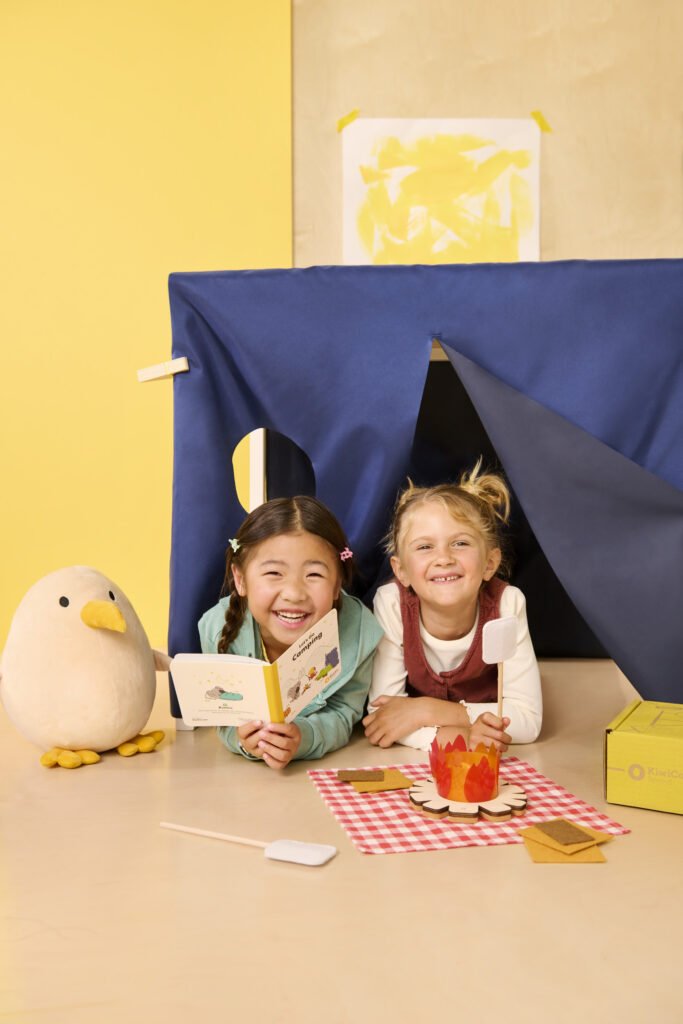
As a former elementary education teacher, one thing I always loved seeing was what happened when children were given an opportunity to actually do something.
Children learn differently when they’re actively involved.
Instead of simply being told how something works, they can:
- Touch it
- Build it
- Test it
- Change it
- Make mistakes
- Try again
And for toddlers, this is especially important.
Learning doesn’t need to look like sitting at a table.
It can happen while your child is:
- Building a tower
- Sorting objects
- Trying to make something fit
- Exploring how something works
- Creating something new
This is the heart of learning through play.
What Do Toddlers Learn Through Hands-On Activities?
Fine Motor Skills
Activities that involve building, stacking, connecting, placing, and manipulating objects give toddlers opportunities to practice coordination and control.
The best part?
To your toddler, it just feels like play.
Problem-Solving
One of my favorite things about hands-on activities is that children don’t always know the answer immediately.
And that’s okay.
Instead of jumping in and fixing everything for your toddler, try asking:
“What do you think will happen?”
“What else could we try?”
“Can you think of another way?”
The experimenting is often where the learning happens.
Early STEM Skills
STEM for toddlers doesn’t need to mean complicated experiments.
Sometimes it simply means:
Build something.
Test it.
Change something.
Try again.
See what happens.
That’s how curiosity starts.
Language Development
Hands-on activities also give you opportunities to naturally introduce new words.
You can talk about:
- Big and small
- More and less
- Inside and outside
- Heavy and light
- Same and different
You don’t have to turn it into a lesson.
Just talk while you play.
Where KiwiCo Fits Into Learning Through Play
This is one of the reasons KiwiCo stood out to me.
I don’t believe toddlers need to spend their days doing formal lessons.
But I do think parents sometimes need help finding new ways to keep play interesting.
KiwiCo can provide a starting point.
You introduce the activity.
Your toddler explores.
And then you can decide how involved you want to be.
Some days, you’ll sit down and play alongside them.
Other days, your toddler may be happy exploring independently.
👉 See the KiwiCo options available for your child’s age.
6 Ways to Get More Learning Out of Any KiwiCo Activity
One of the things I love about hands-on activities is that you can extend the learning without creating an entirely new project.
Here are a few simple ways to do that.
1. Ask Questions
Try asking:
“What do you think will happen?”
“What should we try next?”
“Why do you think that happened?”
You don’t need to quiz your toddler.
Just be curious alongside them.
2. Count Together
Count objects, pieces, or steps while playing.
Keep it natural and fun.
3. Talk About Colors and Shapes
Use descriptive words while your toddler plays.
4. Compare Things
Talk about:
- Bigger and smaller
- More and less
- Heavy and light
5. Let Your Toddler Take the Lead
You don’t always need to demonstrate the “right” way.
Give your child time to experiment.
6. Add Pretend Play
Turn the activity into a story.
Maybe you’re building something for a stuffed animal.
Maybe you’re creating a home.
Maybe you’re helping a favorite toy solve a problem.
Simple pretend-play ideas can give an activity a completely new purpose.
KiwiCo Reviews: Is KiwiCo Worth It?
Now let’s get to the biggest question.
Is KiwiCo worth it?
After looking at the type of activities KiwiCo offers and considering how hands-on play can support children’s learning, I think the answer depends on what you’re looking for as a parent.
KiwiCo May Be Worth It If You:
- Want more hands-on activities without constantly planning them
- Don’t enjoy gathering supplies for projects
- Want new ideas delivered to you
- Are looking for activities designed around your child’s age
- Want convenient ways to encourage learning through play
For busy parents, the convenience may be one of the biggest benefits.
👉 Check out KiwiCo and see which options are available for your child’s age.
KiwiCo May Not Be Worth It If You:
- Love planning activities yourself
- Already have plenty of activity supplies
- Prefer completely open-ended toys and activities
- Don’t want another recurring expense
And I think it’s incredibly important to remember:
Your toddler does not need KiwiCo to learn.
Children learn through everyday life.
They learn while playing with blocks.
They learn outside.
They learn through pretend play.
They learn while helping you cook.
They learn while exploring the world around them.
KiwiCo is simply one option that may make hands-on learning more convenient for busy parents.
KiwiCo vs. DIY Toddler Activities
One of the biggest differences between KiwiCo and DIY activities is preparation.
With a DIY activity, you may need to:
- Find an idea.
- Gather the supplies.
- Set everything up.
- Guide your child if needed.
- Clean everything up.
With a ready-to-go activity, much of the planning is already done for you.
DIY activities can absolutely be meaningful—and they can often be less expensive.
That’s why I don’t think you have to choose one or the other.
Personally, I think having a mixture can make sense.
Simple, everyday activities can fill most of your child’s playtime.
And ready-to-go activities can be especially helpful when you’re out of ideas, short on time, or simply need something new.
My Perspective as a Mom and Former Elementary Education Teacher
One thing I believe strongly is that toddlers don’t need everything to feel like school.
They don’t need worksheets.
They don’t need formal lessons.
They don’t need us constantly telling them the “right” answer.
They need opportunities to:
- Play
- Explore
- Create
- Experiment
- Make mistakes
- Try again
That’s why I love the idea of learning through play.
And that’s also why I think ready-to-go hands-on activities can be helpful for some families.
Not because parents need to constantly keep their toddlers busy.
And not because toddlers need to be learning every second of the day.
But because sometimes having something new and interesting available makes it easier to say:
“Let’s see what happens when we try this.”
And sometimes, that’s all it takes to start a meaningful learning experience.
My Final Thoughts on KiwiCo
If you’re looking through KiwiCo reviews because you’re trying to decide whether it’s worth the money, my biggest advice is to think about what you need most as a parent.
If you love planning activities and already have plenty of supplies at home, you may not need KiwiCo.
But if you love the idea of hands-on learning and simply don’t have the time or energy to constantly plan new activities, KiwiCo may be worth considering!
For me, the biggest appeal is the convenience.
Having activities already planned can take away one more thing you have to think about.
And as a mom, I know that sometimes convenience is worth paying for.
Ready to See if KiwiCo Is Right for Your Family?
If you’re interested in seeing what KiwiCo currently offers for your child’s age, you can explore their available options here:
👉 Explore KiwiCo Activities and Crates
And if you’re looking for even more ways to help your toddler learn naturally without turning your home into a classroom, be sure to read:
👉 Learning Resources for Toddlers: A Complete Guide for Parents
Because you don’t need to fill your toddler’s day with perfectly planned educational activities.
You simply need opportunities for them to play, explore, and be curious.
That’s where the learning happens.