↓ Jump to How I Make Learning Fun
↓ 7 learning activities for active toddlers
Does your toddler or preschooler struggle to sit still long enough to complete a learning activity? Maybe you’ve planned something fun, gathered your supplies, and barely gotten started before your child wants to run off and do something else.
I know this struggle firsthand!
As a former elementary teacher and a mom of two young boys, I’m learning that teaching at home doesn’t always look the way I imagined it would. My four year old is full of energy, and getting him to sit down and participate in traditional learning activities can be challenging. I’ve had to get creative to find ways to hold his attention and make learning something he actually wants to do.
That’s why I started creating learning activities for active toddlers and preschoolers that allow children to move, explore, and practice important skills through play.
Instead of expecting my son to sit at the table every time we practice letters, numbers, or early reading skills, I’ve started incorporating movement into our learning.
We’ve learned to count to 30 by jumping on the trampoline, practiced blending CVC words by jumping from letter to letter, and made letter roads to practice fine motor skills.
These experiences have reminded me that children can learn in many different ways. Sometimes, changing how we approach an activity makes all the difference.
If you’re looking for ways to help your active child practice early learning skills without turning every activity into a battle, I’m sharing seven playful ideas you can try at home.
You don’t need expensive educational toys or elaborate lesson plans. You can start with things you already have at home and build learning into the play your child enjoys.
Why Learning Activities for Active Toddlers Should Include Movement
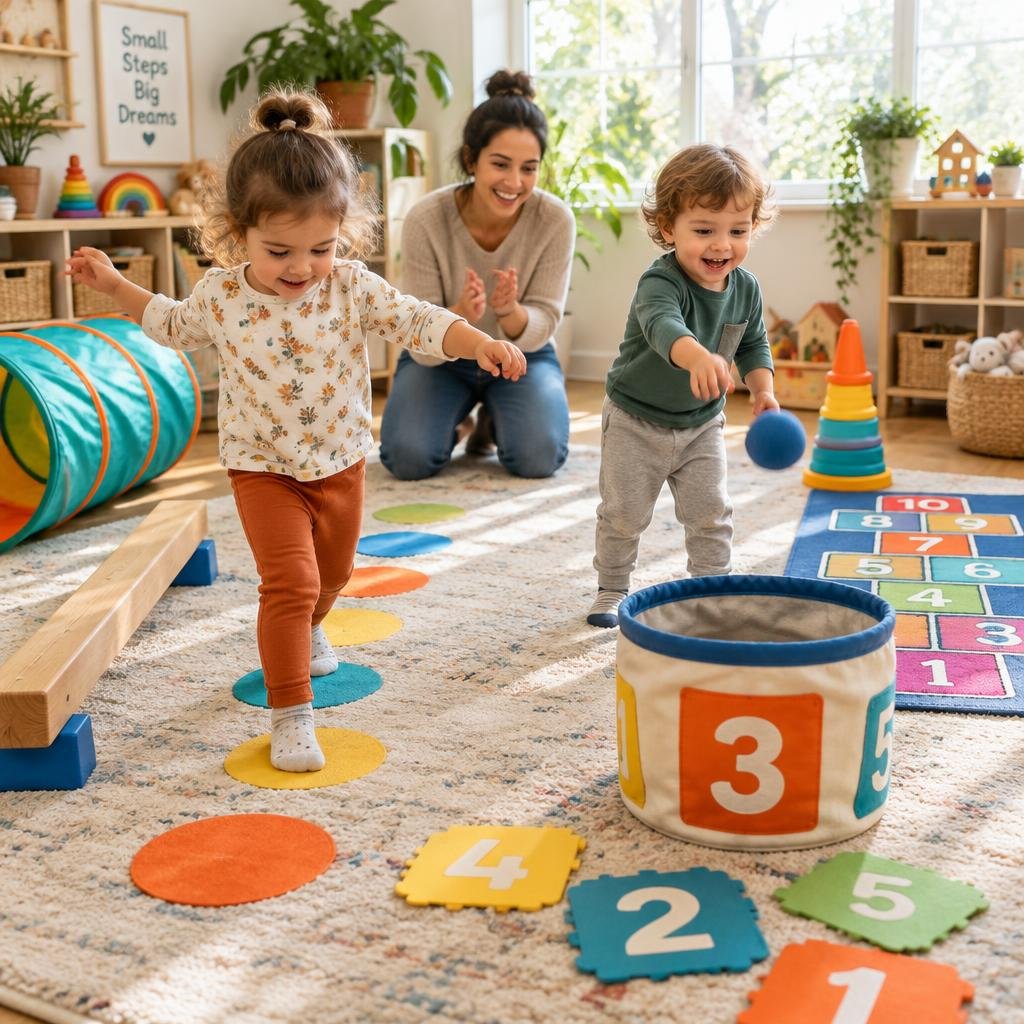
Young children are still developing their attention, self-regulation, and ability to manage their bodies. Many enjoy moving, exploring, touching objects, and interacting with their environment more than sitting through a structured activity.
A child who doesn’t want to sit through a worksheet doesn’t necessarily dislike learning. They may be more interested in the activity when it involves movement, hands on exploration, or something that captures their imagination.
I’ve noticed this with my own four year old. I can plan an activity with a clear learning goal, but that doesn’t mean he’s automatically going to want to sit down and do it.
Rather than giving up on the activity, I try to think about how I can change the approach.
If we’re practicing counting, can we count while jumping? If we’re working on letter sounds, can we turn it into a movement game? If we’re practicing fine motor skills, can we build something together?
The learning goal stays the same, but the activity becomes more engaging.
Learning doesn’t have to happen at a table to be meaningful. Children can practice early literacy, math, problem-solving, and fine motor skills through play and everyday experiences.
If you’re looking for more ideas to support your child’s learning at home, visit my Learning Resources for Toddlers and Preschoolers guide. It brings together different types of learning resources to help you find approaches that work for your family.
How I Make Learning Fun for My Energetic Four Year Old
I’m still figuring this out as I go, but some of our best learning experiences have happened when I’ve stopped trying to make my son sit still and started incorporating movement into what we’re learning.
Here are three examples from our home.
1. We Learned to Count to 30 by Jumping on the Trampoline
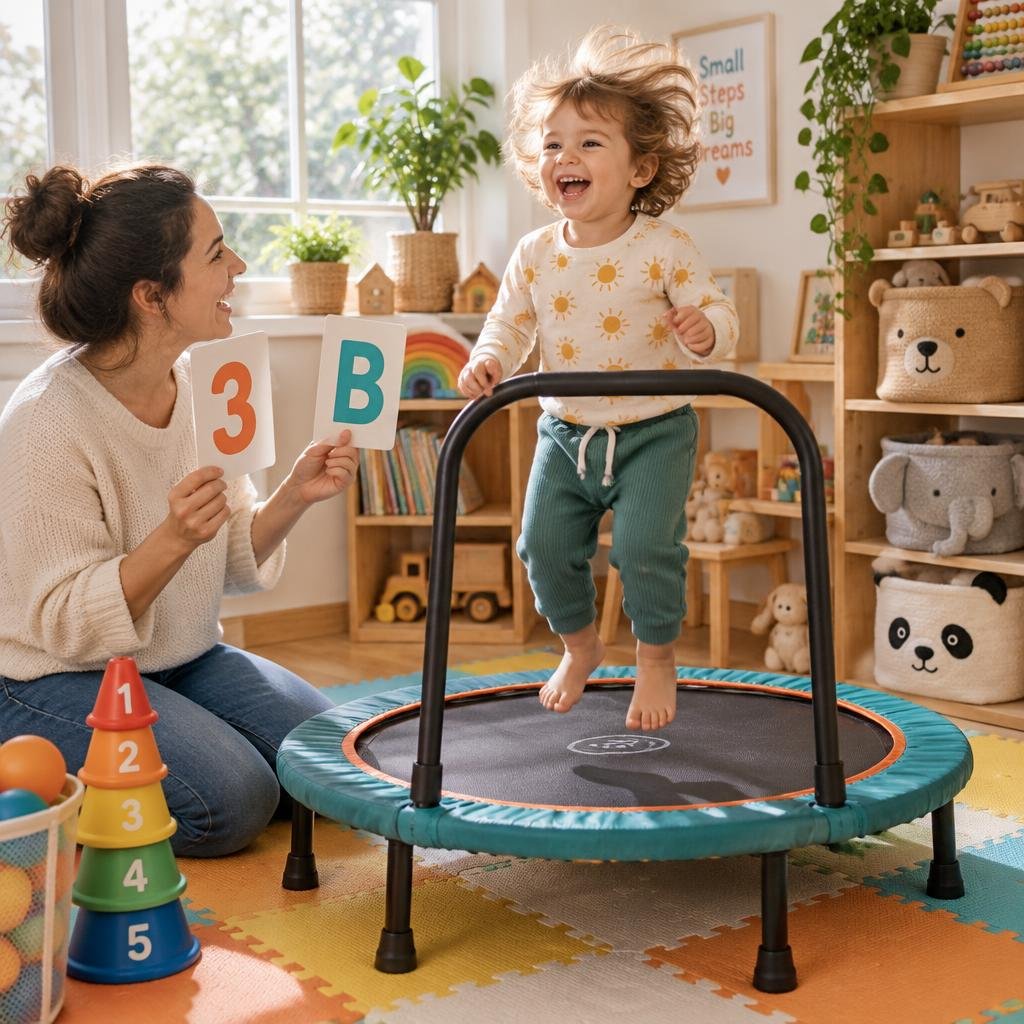
One of the ways my son learned to count to 30 was by jumping on the trampoline while counting.
Instead of sitting at a table with number cards, we combined counting with something he already loved doing.
We counted as he jumped, practicing the number sequence one number at a time. The trampoline gave him an opportunity to move while we worked on counting together.
This was a great reminder that learning opportunities don’t always need to look like formal lessons. We were practicing counting while he was doing something fun.
Try this activity with your child:
- Count jumps together, starting with a number range your child is comfortable with.
- Count steps as you walk up the stairs.
- Count toy cars as you line them up.
- Count blocks as you build a tower.
- Count claps, hops, or dance moves during a favorite song.
Start where your child is. If counting to five is new, begin there. If they’re comfortable counting higher, gradually work toward a bigger goal.
You can also count objects together to help your child connect number words with actual quantities.
For jumping activities, choose a safe setup appropriate for your child’s age and abilities, and supervise closely.
2. We Practice Blending CVC Words by Jumping to Each Letter
Early reading is another area where I’ve had to think outside the box.
My son doesn’t always want to sit down and work through a reading activity, so we’ve started incorporating movement into our CVC word practice.
CVC stands for consonant-vowel-consonant. These are simple words such as cat, sun, map, and dog.
We practice blending the sounds in these words by jumping to each letter. Instead of sitting still while working through the word, he gets to move from one letter to the next as we practice.
For example, when we’re working on cat, we identify the letters, practice their individual sounds, and then blend those sounds together to say the word.
Here’s how you can try it at home:
- Choose a simple word containing letter sounds your child already knows.
- Write the three letters on separate pieces of paper.
- Place the letters where your child can see them.
- Practice each sound as your child moves from one letter to the next.
- Bring the sounds together and say the whole word.
You can use paper, letter cards, or magnetic letters. You don’t need special equipment.
If your child is just beginning to learn letter sounds, start by identifying letters and practicing their sounds before introducing blending. Keep the activity short, encouraging, and appropriate for your child’s current skills.
The goal is to make reading practice inviting, not to rush through a long list of words.
3. We Make Letter Roads to Practice Fine Motor Skills
Another activity we’ve been doing is making letter roads.
This is a fun way to combine early literacy with fine motor practice. Instead of immediately sitting down to write letters with a pencil, we create roads shaped like letters and use them to explore the shapes.
I like activities like this because early writing involves more than knowing what a letter looks like. Children also benefit from opportunities to develop hand control, coordinate movements, and become familiar with shapes and lines.
Try making letter roads at home:
- Draw a large letter on a piece of paper.
- Invite your child to help create the road.
- Use a toy car to follow the letter’s shape.
- Talk about the letter as you trace or drive along it.
- If your child is ready, connect the letter to its sound or a familiar word.
You can also use play dough, blocks, or finger-tracing activities to explore letter shapes.
These activities don’t replace practicing how to form letters with a pencil, but they can provide a playful way to build familiarity with letters and practice using the hands.
For more ideas, read my Fine Motor Skills Activities for Toddlers
7 Learning Activities for Active Toddlers and Preschoolers
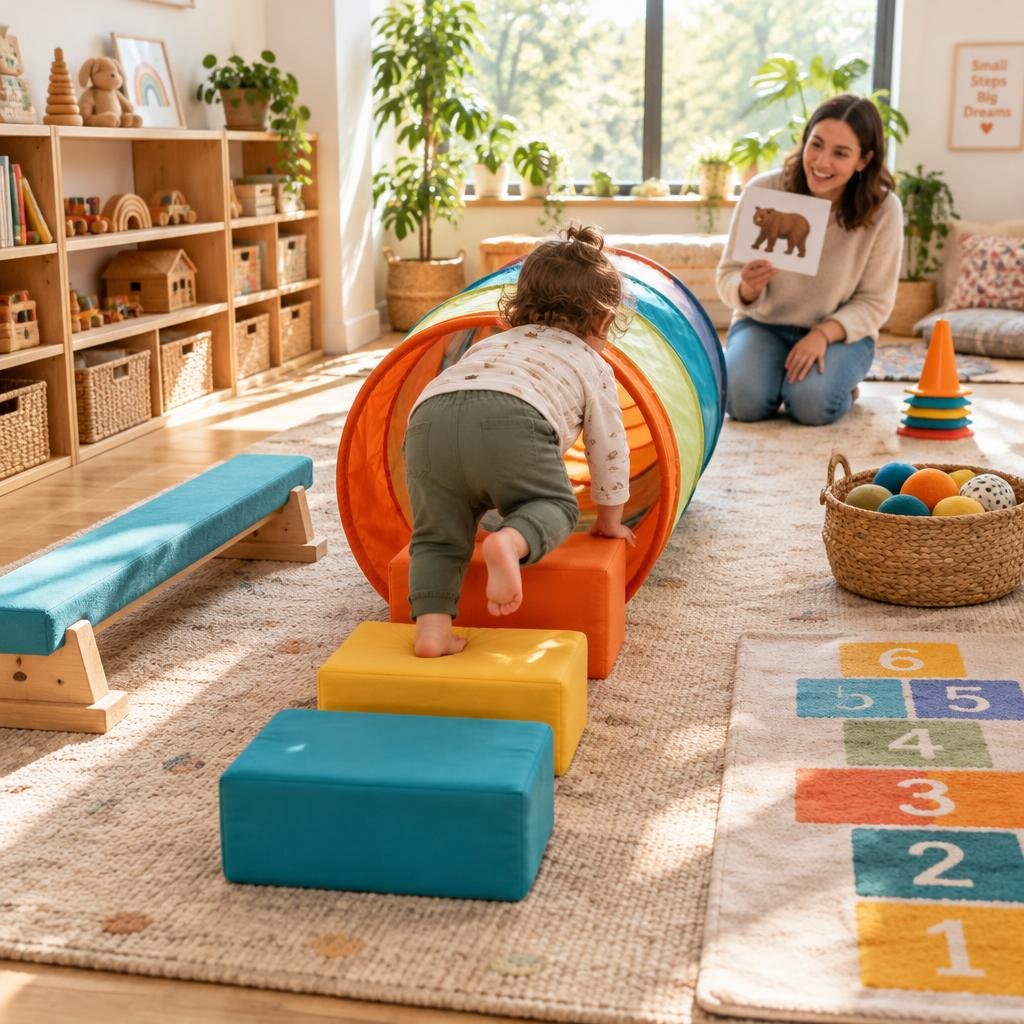
You don’t have to recreate our exact activities. The best approach is to find ways to practice a skill that fit your child’s interests, abilities, and energy level.
Here are seven simple ways to get started.
1. Turn Learning Into a Movement Game
If your child loves to move, use that energy to your advantage.
You can practice letters, numbers, colors, and shapes without requiring your child to sit in one place.
Try these ideas:
- Place letter cards around the room and ask your child to find a particular letter.
- Call out a color and have your child find an object that matches.
- Put number cards on the floor and move to the number you name.
- Count jumps, claps, steps, or dance moves together.
- Create a simple obstacle course with opportunities to count or identify shapes along the way.
For younger toddlers, focus on simple concepts such as matching objects, identifying colors, and counting small groups together. For preschoolers, you can gradually introduce letter recognition and familiar letter sounds.
You can adapt almost any movement game to the skill you’re practicing.
2. Use Your Child’s Favorite Toys
You don’t always need a separate set of educational toys to practice early learning skills.
Sometimes, the toys your child already loves are the easiest way to get them interested.
If your child loves toy cars, count them, sort them by color, or create a parking lot with numbered spaces.
If they love animals, sort them into groups, count them, or make up stories about where the animals live.
If building is their favorite activity, count blocks, create patterns, compare sizes, or talk about shapes.
The possibilities are almost endless.
Start with something your child already finds interesting and look for a natural way to introduce the learning goal.
If you’re looking for toys that encourage hands-on learning, check out my Best Educational Toys for Toddlers
3. Turn Learning Into Pretend Play
Pretend play is another way to make learning more engaging.
You could open a pretend grocery store, run a toy restaurant, or set up a delivery service for stuffed animals.
For example, if you’re playing restaurant, your child can count pretend food items, sort them by type, or match numbered orders with the right quantities.
If you’re playing shop, you can practice colors, shapes, counting, and simple comparisons.
You can even incorporate early literacy by making pretend signs, menus, or labels together.
You don’t have to plan an elaborate activity. A few toys and a simple idea are often enough to get started.
4. Make Learning Hands-On
Some children are more interested in an activity when they can touch, build, move, or create something.
Instead of asking your child to complete a worksheet about shapes, let them build shapes with blocks.
Instead of only looking at letters on a page, let them make letters with play dough or match physical letter pieces.
Instead of practicing counting only verbally, count objects you can move and handle together.
Here are a few ideas:
- Sort objects by color, size, or type.
- Build towers with a certain number of blocks.
- Match identical letters or shapes.
- Make simple patterns using blocks or other suitable objects.
- Use play dough to explore shapes and letter forms.
- Play with age-appropriate puzzles and manipulatives.
Hands-on play gives children an opportunity to interact with what they’re learning rather than simply being asked to remember information.
For additional ideas, explore my Fine Motor Skills Activities for Toddlers
5. Keep Activities Short and Give Your Child Time to Move
When you’re planning a learning activity, it can be tempting to prepare several steps and expect your child to complete all of them.
But if your child is already struggling to stay engaged, a long activity may make the experience more frustrating for both of you.
Instead, start small.
You might practice three letters, count five objects, or complete one simple matching game. If your child wants to continue, you can add another step.
If their attention fades, take a break and return to learning later.
You can also alternate between different kinds of activities. Follow a quiet puzzle with a movement game, or move from a short table activity to a hands-on building challenge.
Attention varies with age, interest, and the task itself. You don’t need to make every activity longer just because your child completed it quickly.
Sometimes, a few engaged minutes are a perfectly reasonable starting point.
6. Let Your Child Help Lead the Activity
One thing I’m learning as I work with my son is that I can’t always expect him to be interested in an activity simply because I’ve planned it.
Giving him a little choice can make the experience more inviting.
Instead of asking, “Do you want to learn your letters?” you might say, “Do you want to find letters or count your cars today?”
You can still decide what skill you’d like to practice while letting your child choose between two activities.
You can also let them choose the materials, decide which toy to count, or come up with the next challenge.
If your child turns a planned activity into a different kind of game, look for an opportunity to build on their idea. You may be able to incorporate the same learning goal in a way that feels more natural to them.
7. Make Learning Silly and Playful
Sometimes, a little silliness is all it takes to make an activity more inviting.
You can use funny voices, pretend to make mistakes, or create a playful challenge.
For example, if you’re counting toy animals, pretend you keep forgetting how many you have and ask your child to help you.
If you’re practicing colors, intentionally pick the wrong color and let your child correct you.
If you’re working on letter sounds, make up a silly story about a character who needs help finding the right letter.
You can also use songs, rhymes, and simple challenges to keep the activity engaging.
The goal isn’t to entertain your child every second. It’s to create opportunities for curiosity, participation, and shared enjoyment.
Does Learning Through Play Mean We Should Never Sit at a Table?
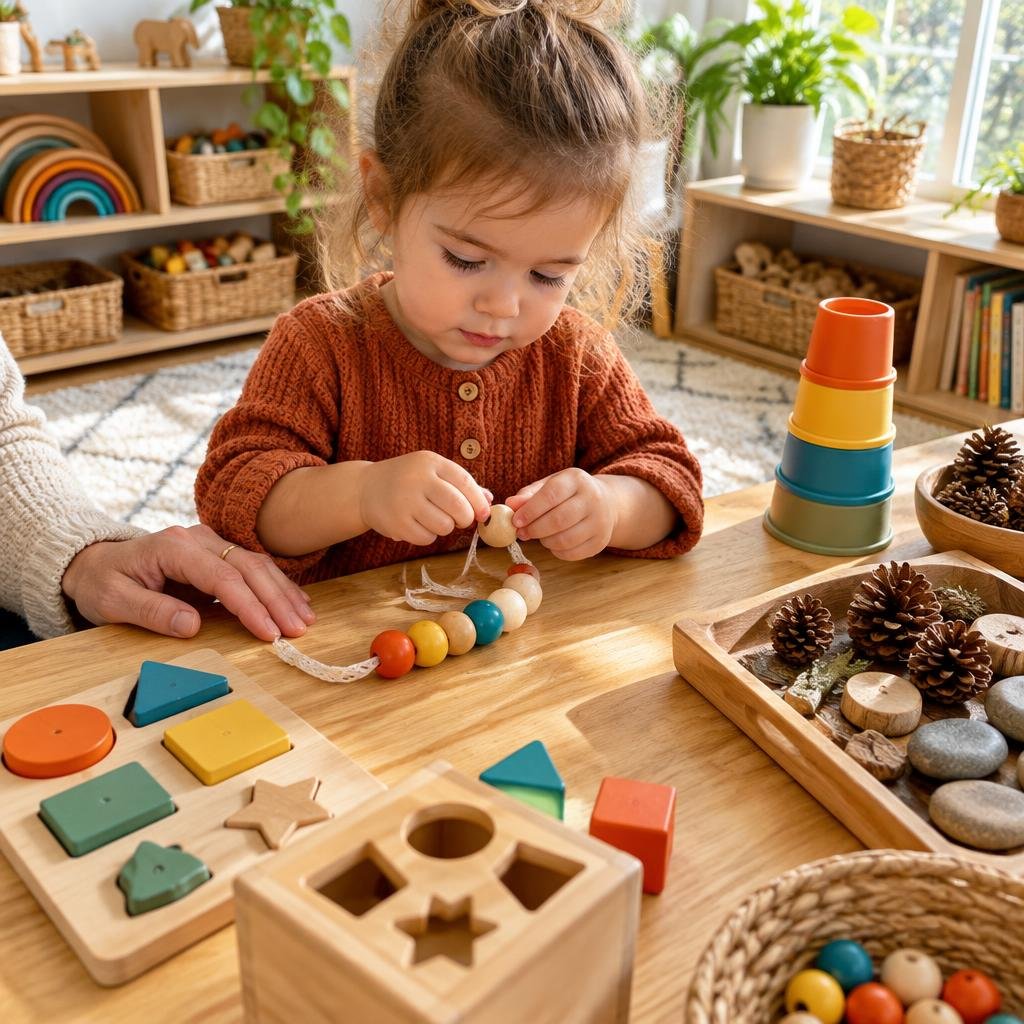
Absolutely not!
I believe there is a time and place for sitting down and working on a focused activity, especially as children grow and begin practicing skills such as writing.
Learning through play doesn’t mean avoiding structure. It means recognizing that different skills can be practiced in different ways.
For example, we might explore letter shapes through play, use movement to practice letter sounds, and then sit down for a short activity to practice forming a letter with a pencil.
These approaches can complement one another.
When children are learning to write, they need opportunities to practice the actual movements involved in forming letters. Building with blocks, tracing shapes, and playing with dough can support related skills, but they aren’t substitutes for handwriting practice.
The same is true of other early learning concepts. A child might enjoy counting jumps, but they also benefit from counting objects and connecting number words with quantities.
The goal isn’t to remove table work. It’s to make learning accessible and engaging while still giving children opportunities to practice the specific skills they’re developing.
For my son, that means I’m learning to be flexible. Some activities work better when we’re moving around, while others are better suited to a quiet moment at the table.
I’m not looking for one perfect method. I’m looking for ways to help him learn that work for the child he is right now.
What If My Child Still Doesn’t Want to Participate?
Even when you make an activity playful, your child may not want to participate every time.
And that’s okay.
You can try a different activity, simplify the task, offer a choice, or take a break and return to it later.
It’s also worth considering whether the activity matches your child’s current abilities. If something is too difficult, they may become frustrated. If it’s too easy or repetitive, they may lose interest.
Try focusing on one small goal at a time rather than trying to teach several things in a single activity.
For example, if you’re working on early reading, you might focus on recognizing a few letters or practicing a familiar sound before moving on to blending words.
If your child consistently struggles to participate in activities across different settings, or you have concerns about their attention, development, or ability to engage in everyday routines, consider discussing those concerns with their pediatrician. A preference for movement by itself doesn’t tell you whether there’s an underlying issue.
Above all, try not to turn every learning opportunity into a battle. Building positive experiences with learning matters, too.
You Don’t Have to Make Every Learning Activity Perfect
As a mom and former teacher, I’m learning that teaching young children at home often requires a different approach than I might initially expect.
My four-year-old doesn’t always want to sit down and work through an activity, so I’m finding ways to make learning more engaging for him.
We’ve counted to 30 on the trampoline, practiced blending CVC words by jumping to each letter, and made letter roads to work on fine motor skills.
These are simple activities, but they help us work on meaningful skills in a way that fits our everyday life.
You don’t need a perfect setup, expensive materials, or an elaborate lesson plan to get started. You can count toys, find letters around the house, build with blocks, or turn an everyday activity into a little learning opportunity.
And when it’s time to sit down and practice a more focused skill, you can do that, too.
If your toddler or preschooler won’t sit still for traditional learning activities, try changing the approach before assuming they aren’t interested in learning. The best learning activities for active toddlers often begin with the things they already enjoy.
Sometimes, the best place to start is with the play they already love.
If you’re looking for more ideas to support learning at home, start with my Learning Resources for Toddlers and Preschoolers guide. You’ll find more ideas for choosing learning materials and creating opportunities for meaningful play.
Frequently Asked Questions
What are the best learning activities for active toddlers?
Movement games, scavenger hunts, pretend play, hands-on counting games, letter hunts, and building activities are all options to try. Choose activities that match your child’s current abilities and interests, and focus on practicing one manageable skill at a time.
How do I teach a toddler who won’t sit still?
Start with short, playful activities that match your child’s interests. Try movement games, counting toys, letter hunts, pretend play, or hands-on activities. You don’t have to require your toddler to sit at a table to practice early learning skills.
How long should a toddler spend on a learning activity?
There isn’t one ideal length for every child or activity. Start with a short activity and observe how your child responds. Some activities may hold their attention for only a few minutes, while others may keep them engaged longer. Follow your child’s cues and build gradually when appropriate.
Can toddlers learn through play instead of worksheets?
Yes. Play can provide opportunities to practice early literacy, math, problem-solving, language, and fine motor skills. Worksheets and other structured activities can also have a place, particularly when children are ready to practice specific skills. The best approach depends on the child’s age, abilities, and the learning goal.
How can I teach my four-year-old letters and numbers if they won’t sit still?
Try incorporating letters and numbers into activities your child already enjoys. You can count jumps, find letters around the house, practice letter sounds with movement games, or count objects while building with blocks. My four-year-old learned to count to 30 while jumping on the trampoline, and we practice blending CVC words by jumping to each letter.
What are the best learning activities for an energetic preschooler?
Movement games, scavenger hunts, pretend play, building activities, letter roads, and hands-on counting games are all options to try. Choose activities that match your child’s current abilities and interests, and keep the focus on practicing one manageable skill at a time.
Should I make my child sit at a table to practice writing?
Short, focused table activities can be useful when children are ready to practice handwriting and letter formation. You can combine these with playful activities that build familiarity with letters and develop related hand skills. If your child struggles with a longer activity, try shorter practice sessions and gradually build as appropriate.
What if my child refuses every learning activity I plan?
Try offering a choice, following your child’s interests, simplifying the activity, or taking a break. You can also look for learning opportunities in everyday routines rather than always introducing a separate lesson. If you have ongoing concerns about your child’s attention or development across settings, talk with their pediatrician.
Do I need to buy educational toys to teach my toddler at home?
No. You can practice many early learning skills with household objects, books, blocks, toy cars, and other materials you already own. Educational toys can provide useful opportunities for learning, but the way you interact with your child and the activities you create also matter.