🧸 Jump to Recommended Educational Toys ↓
After years of teaching and now watching my own children learn through play, I look for toys that are:
- Engaging enough that children actually want to play with them
- Open-ended so they can be used in multiple ways
- Developmentally appropriate
- Encouraging creativity and independence
- Supporting real-world skills
Below are some of my favorite learning toys for toddlers that combine fun with meaningful development.
| Category | My Pick |
|---|---|
| ⭐ Amber’s Top Pick | Magnetic Tiles 3D Building Blocks |
| Best Budget | Wooden Puzzles |
| Best STEM | TaleBot Pro Coding Robot |
| Best Creativity | Art Set |
| Best Fine Motor | Lacing Beads |
| Best Imagination Play | Little People Caring for Animals Farm |
What Makes a Toy Educational for Toddlers?
Not every toy marketed as “educational” actually encourages deep learning. A truly valuable developmental toy gives children opportunities to explore, experiment, and think.
Learning Through Play
Young children learn best through hands-on experiences.
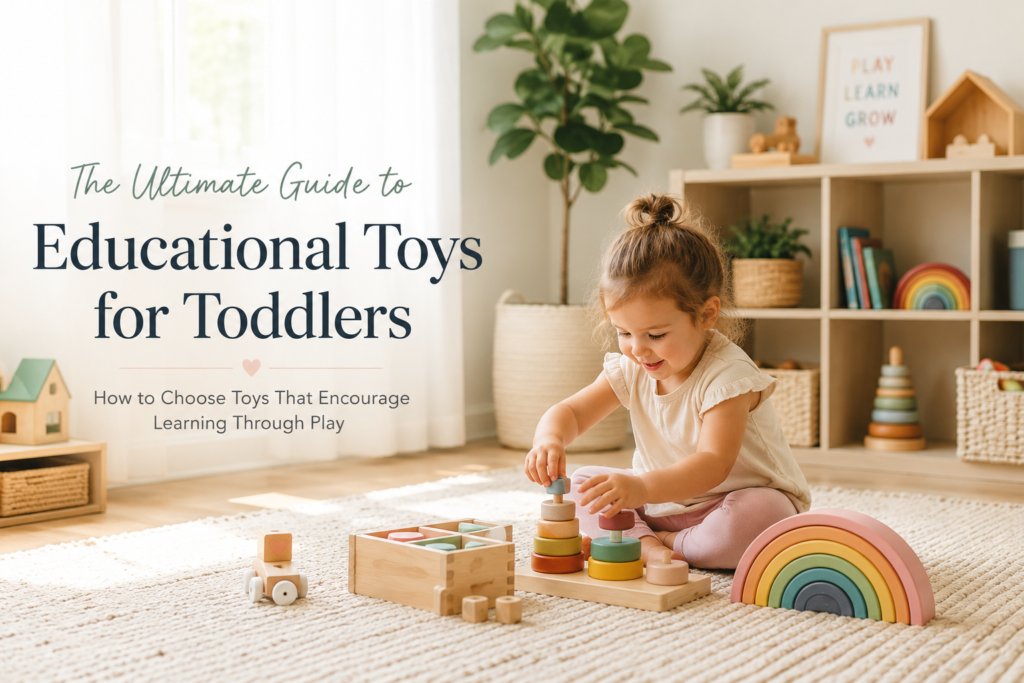
When a toddler stacks blocks, builds a tower, completes a puzzle, or creates a pretend scenario, they are practicing skills like:
- Problem-solving
- Spatial awareness
- Communication
- Creativity
- Memory
- Coordination
Play is not separate from learning during the toddler years — play is learning.
Open-Ended vs. Single-Purpose Toys
One of the biggest things I look for as a teacher and mom is whether a toy allows a child to use their imagination.
An open-ended toy can be used in many different ways.
For example, a set of blocks can become:
- A castle
- A garage
- A bridge
- A pretend store
A toy with only one function may entertain a child briefly, but open-ended toys often grow with your child for years.
Benefits of Educational Toys for Toddler Development
The toddler years are a time of incredible growth. Between ages 2–5, children are developing language, independence, problem-solving abilities, and the foundations for future learning.
The right educational toys for toddlers provide opportunities to practice these skills naturally through play.
Language Development
Many parents think language skills only develop through books or conversations, but play is also a powerful tool for communication.
Pretend play toys, interactive books, and storytelling activities encourage toddlers to:
- Learn new vocabulary
- Practice describing ideas
- Create stories
- Improve communication skills
- Build confidence expressing themselves
For example, when a child plays “restaurant” with pretend food, they are practicing words, social skills, and imagination.
Language skills grow through conversation, pretend play, storytelling, and interactive experiences. Toys like books, puppets, pretend play sets, and open-ended toys can encourage toddlers to communicate and build vocabulary. For more ideas on using play to support communication, explore my guide to Language Development Activities for Toddlers.
Fine Motor Skills
Fine motor skills involve the small muscles in the hands and fingers. These skills are important for everyday tasks like:
- Holding a pencil
- Buttoning clothes
- Using scissors
- Writing
- Feeding themselves
Toys that involve building, sorting, threading, or manipulating small pieces help strengthen these important skills.
Looking for more ways to help your toddler build strong hands and develop important skills through play? Explore my complete guide to Fine Motor Skills Activities for Toddlers, where I share simple, hands-on activities and toy recommendations that support coordination, independence, and school readiness.
Problem-Solving Skills
Some of the best developmental toys for toddlers are the ones that make children think.
When a child tries to complete a puzzle, build a structure, or figure out how something works, they are learning:
- Cause and effect
- Planning
- Persistence
- Critical thinking
These skills build confidence because children learn, “I can figure this out.”
For simple ideas you can try at home, check out my guide to Easy STEM Activities for Toddlers, where I share hands-on activities that encourage curiosity, creativity, and problem-solving through play.
Creativity and Imagination
Creativity is not just about making art. It is about learning to think flexibly and come up with new ideas.
Open-ended toys allow children to create their own experiences instead of simply following directions.
Independence and Confidence
Toddlers are entering a stage where they want to do things themselves.
The right toys allow children to practice independence through activities they can complete without constant adult help.
This builds:
- Confidence
- Focus
- Self-esteem
- Problem-solving abilities
How to Choose the Best Learning Toys for Your Toddler
With so many options available, choosing toys can feel overwhelming. Here are the things I look for when selecting toys for my own children and recommending them to other parents.
Choose Toys That Grow With Your Child
The best toys are ones your child can use for more than a few months.
A quality educational toy should have different levels of play as your child grows.
For example:
A toddler may use blocks to stack towers.
A preschooler may use those same blocks to create buildings, tell stories, and practice early math concepts.
Look for Multiple Ways to Play
The best toddler learning toys are not always the ones with the most features.
Often, simple toys create the deepest learning.
Look for toys that encourage:
- Building
- Pretend play
- Creating
- Sorting
- Exploring
- Experimenting
Follow Your Child’s Interests
Every child learns differently.
One toddler may love:
- Building
- Animals
- Art
- Music
- Puzzles
Another child may prefer:
- Pretend play
- Sensory activities
- Movement
The goal is not to force a certain type of learning but to provide opportunities that match your child’s curiosity.
Top 10 Educational Toys for Toddlers
1. Amber’s Top Educational Toy: Magnetic Tiles 3D Building Blocks
Recommended Age: 2+
Developmental Skills Supported:
- STEM learning
- Creativity
- Spatial reasoning
- Problem-solving
- Fine motor skills
Magnetic building tiles are my top pick because they are one of the most versatile educational toys for toddlers.
Children can build houses, towers, animals, shapes, and endless creative designs. Unlike toys that only have one purpose, magnetic tiles encourage children to experiment and create something new every time they play.
As a former teacher, I love toys that allow children to practice early engineering skills without realizing they are learning.
Why It Earned the Top Pick Category
Magnetic tiles support so many areas of development at once:
- Children learn about balance and structure
- They practice planning and problem-solving
- They strengthen hand-eye coordination
- They explore early math and geometry concepts
What Children Learn While Playing
A child might simply say, “I’m building a house.”
But they are actually learning:
- Shapes
- Patterns
- Symmetry
- Cause and effect
- Design thinking
Pros:
✅ Open-ended play
✅ Great for siblings
✅ Builds STEM skills
✅ Can be used for years
Cons:
❌ Higher price point than some toddler toys
❌ Requires storage for pieces
Best For: Families looking for one toy that provides years of learning opportunities.Affiliate Recommendation Paragraph:
2. Best Budget-Friendly Educational Toy: Wooden Puzzles
Recommended Age: 18 months+
Developmental Skills Supported:
- Problem-solving
- Fine motor skills
- Vocabulary
- Memory
Wooden puzzles are a classic for a reason. They are simple, affordable, and incredibly beneficial for toddler development.
Whether your child is matching animals, vehicles, letters, or shapes, puzzles teach children to observe, think critically, and persist when something feels challenging.
Why They Earned This Category
Puzzles provide a great learning opportunity without requiring batteries, screens, or complicated instructions.
What Children Learn While Playing
Toddlers practice:
- Matching
- Visual recognition
- Hand coordination
- Patience
- Concentration
Pros:
✅ Budget-friendly
✅ Builds focus
✅ Great first learning toy
Cons:
❌ Some puzzles may be outgrown quickly
Best For: Toddlers beginning to develop problem-solving skills.
3. Best Open-Ended Toy: Melissa & Doug Wooden Building Blocks
Recommended Age: 18 months+
Developmental Skills Supported:
- Creativity
- Problem-solving
- Imagination
- Fine motor skills
- Early math concepts
Wooden blocks are one of those timeless toys that every childhood benefits from having. They may seem simple, but they are actually powerful open-ended toys for toddlers because there is no “right” way to play.
One day your toddler may build a tower. The next day, those same blocks may become a house for stuffed animals, a road for cars, or a pretend grocery store.
That flexibility is what makes them such a valuable learning tool.
Why It Earned This Category
As a teacher, I love toys that allow children to create instead of simply follow instructions. Wooden blocks encourage children to become inventors, designers, and problem-solvers.
What Children Learn While Playing
While stacking and building, children practice:
- Balance and stability
- Size comparison
- Counting
- Patterns
- Planning ahead
- Creativity
Pros:
✅ Extremely versatile
✅ Encourages imagination
✅ Durable
✅ Great for siblings
Cons:
❌ Requires cleanup/storage
❌ Younger toddlers may need supervision
Best For: Families wanting a classic toy that grows with their child.
4. Best Toy for Fine Motor Skills: Lacing Beads
Recommended Age: 2+
Developmental Skills Supported:
- Hand strength
- Hand-eye coordination
- Concentration
- Early math skills
Lacing beads are one of my favorite developmental toys for toddlers because they strengthen the exact hand muscles children need later for writing and everyday tasks.
Threading beads requires focus and precision, making it a great quiet-time activity.
Want more ideas? If your goal is to strengthen your child’s hand muscles and prepare them for writing, I’ve put together a complete guide with 25 Fine Motor Skills Activities for Toddlers. It includes easy play ideas you can do at home, plus my favorite toys that make building fine motor skills fun.
Why It Earned This Category
Fine motor development is incredibly important during the toddler years. Activities that strengthen fingers and coordination prepare children for future skills like:
- Holding pencils
- Cutting with scissors
- Buttoning clothing
What Children Learn While Playing
Toddlers practice:
- Patterns
- Colors
- Counting
- Sequencing
- Concentration
Pros:
✅ Supports school readiness
✅ Easy activity to set up
✅ Encourages focus
Cons:
❌ Small pieces require supervision
Best For: Toddlers who enjoy hands-on activities and building skills.
5. Best Toy for Language Development: Interactive Story Books
Recommended Age: 3–8
Developmental Skills Supported:
- Vocabulary
- Listening skills
- Imagination
- Communication
Books are truly one of the most powerful learning tools you can give a child.
Interactive story books, sound books, lift-the-flap books, and storytelling sets make reading even more engaging for toddlers.
Why It Earned This Category
Language development happens through exposure, conversation, and connection.
When parents read with children, they are helping build:
- Vocabulary
- Comprehension
- Early literacy skills
What Children Learn While Playing
Children practice:
- Naming objects
- Predicting what happens next
- Answering questions
- Creating stories
Pros:
✅ Supports language growth
✅ Builds imagination
✅ Screen-free
Cons:
❌ Requires adult involvement for best results
Best For: Parents wanting to encourage communication and early literacy.
6. Best STEM Toy: TaleBot Pro Coding Robot
Recommended Age: 3+
Developmental Skills Supported:
- Logic
- Sequencing
- Problem-solving
- Early technology skills
Coding toys introduce children to computational thinking in a playful way.
Toddlers and preschoolers do not need to understand complicated programming. They simply need opportunities to experiment with cause and effect.
Why It Earned This Category
STEM toys help children learn that problems can be solved by trying different strategies.
What Children Learn While Playing
Children practice:
- Following steps
- Predicting outcomes
- Adjusting plans
- Logical thinking
Pros:
✅ Encourages problem-solving
✅ Fun and engaging
✅ Great for curious kids
Cons:
❌ May be better suited for older toddlers/preschoolers
Best For: Children who love figuring out how things work.
7. Best Montessori-Inspired Toy: Busy Board
Recommended Age: 1-3
Developmental Skills Supported:
- Independence
- Practical life skills
- Fine motor development
- Focus
Montessori-inspired toys are popular because they encourage children to practice real-world skills independently.
Montessori-inspired toys encourage independence, concentration, and hands-on learning. If you’re looking for more teacher-approved recommendations, explore my guide to 15 Best Montessori Toys for Toddlers That Encourage Learning Through Play.
Busy boards often include activities like:
- Zippers
- Buttons
- Locks
- Buckles
- Latches
Toddlers love doing things “by themselves.” These toys allow them to practice independence in a safe way.
What Children Learn While Playing
They develop:
8. Best Creative Toy: Art Supplies Set
Recommended Age: 2+
Developmental Skills Supported:
- Creativity
- Fine motor skills
- Self-expression
- Confidence
Art is more than making pretty pictures. It allows children to communicate ideas and explore their imagination.
A simple art basket with crayons, washable markers, paint, and paper can provide hours of learning.
Pros:
✅ Endless possibilities
✅ Affordable
✅ Encourages creativity
Cons:
❌ Can be messy
Best For: Creative toddlers who love exploring.
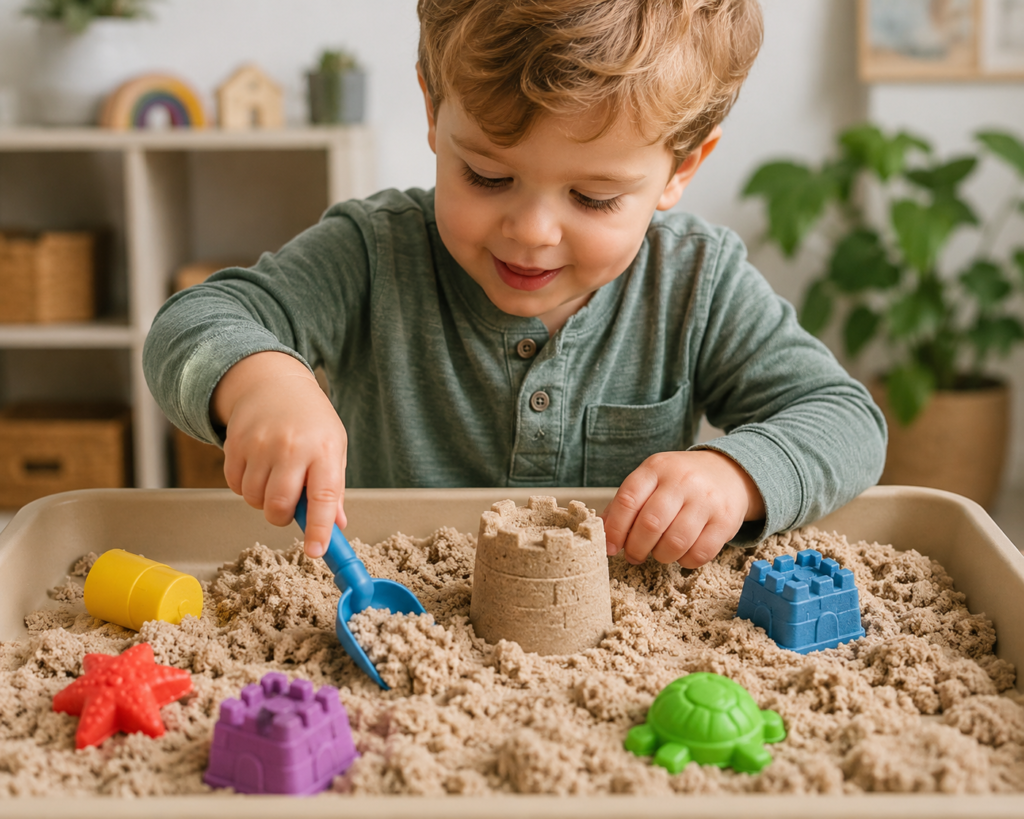
9. Best Sensory Learning Toy: Sensory Play Kit
Recommended Age: 2+
- Play dough
- Water play
- Kinetic sand
- Sensory bins
Developmental Skills Supported:
- Sensory exploration
- Language
- Creativity
- Fine motor skills
Sensory play allows children to explore different textures, movements, and materials.
Sensory toys are just one way to support your child’s development. If you’re looking for simple, hands-on ideas you can do at home, explore these Sensory Activities for Toddlers for fun, engaging play that builds important developmental skills.
Why It Earned This Category
Sensory activities encourage children to experiment and engage their senses while building important developmental skills.
Pros:
✅ Calming activity
✅ Encourages creativity
✅ Supports exploration
Cons:
❌ Requires preparation and cleanup
Best For: Toddlers who enjoy hands-on experiences.
10. Best Independent Learning Toy: Activity Workbook
Recommended Age: 3–5
Developmental Skills Supported:
- Early academics
- Pencil skills
- Letters
- Numbers
Activity workbooks can be helpful when used as a playful activity rather than pressure.
Why It Earned This Category
Short learning activities can help preschoolers practice:
- Shapes
- Letters
- Numbers
- Patterns
Pros:
✅ Affordable
✅ Easy to use
✅ Great for quiet time
Cons:
❌ Should not replace hands-on play
Best For: Preschoolers who enjoy structured activities.
Frequently Asked Questions About Educational Toys for Toddlers
What toys help toddler brain development?
Toys that encourage active thinking and exploration are excellent for brain development.
Some examples include:
- Building toys that encourage problem-solving
- Puzzles that build memory and reasoning
- Pretend play toys that develop language skills
- Sorting and matching toys that support early math skills
- Creative toys that encourage imagination
The best toys give children opportunities to make choices, experiment, and learn from their own discoveries.
Montessori-inspired toys are a great example because they encourage concentration, independence, and problem-solving. If you are shopping for a younger toddler, check out my guide to 10 Best Montessori Toys for 1-Year-Olds, where I share age-appropriate toys that support early learning and development.
What toys should a 2-year-old learn with?
For a 2-year-old, look for toys that support developing independence and basic skills.
Great choices include:
- Chunky puzzles
- Wooden blocks
- Shape sorters
- Play dough
- Pretend play sets
- Simple art supplies
- Books
- Fine motor activities
At this age, children learn best through repetition and exploration rather than formal instruction.
What are the best educational toys for 3-year-olds?
Three-year-olds are becoming more imaginative and independent, making this a great age for more advanced learning toys.
Some great options include:
- Magnetic building sets
- STEM toys
- Matching games
- Beginner board games
- Pretend play sets
- Craft kits
- Early learning activities
The best educational toys for 3-year-olds allow children to challenge themselves while still having fun.
Are Montessori toys better for toddlers?
Montessori-inspired toys can be a wonderful option because they often encourage independence, concentration, and practical life skills.
However, a toy does not have to be officially Montessori to support learning.
A great educational toy should:
- Encourage hands-on exploration
- Allow children to practice skills independently
- Match their developmental stage
- Encourage curiosity
How many toys should a toddler have?
There is no perfect number of toys, but many child development experts recommend focusing on quality over quantity.
Too many toys can sometimes make it harder for children to focus.
A smaller collection of meaningful toys can encourage:
- Deeper play
- More creativity
- Longer attention spans
Rotating toys every few weeks can also make familiar toys feel new again.
Are electronic toys better for learning?
Electronic toys can sometimes support learning, but they should not replace hands-on play.
Toddlers learn best through:
- Movement
- Conversation
- Creativity
- Exploration
- Real-world experiences
A simple set of blocks or pretend play materials can often provide more developmental value than a toy with many lights and sounds.
What makes a toy developmentally appropriate?
A developmentally appropriate toy should match your child’s current abilities while offering a small challenge.
Look for toys that:
- Are safe for your child’s age
- Encourage active participation
- Can be used in multiple ways
- Support skills they are currently developing
Final Thoughts: Choosing Educational Toys That Help Your Toddler Learn Through Play
The best educational toys for toddlers are not necessarily the newest or most expensive toys. They are the ones that encourage children to explore, imagine, create, and discover.
As a former elementary teacher and mom, I always look for toys that do more than entertain. I look for toys that invite children to think.
A great learning toy does not need to feel like a lesson. The magic happens when children are having fun and building important skills without even realizing they are learning.
Whether you choose magnetic tiles for STEM exploration, blocks for creativity, puzzles for problem-solving, or books for language development, the goal is the same:
Create an environment where your child feels curious, confident, and excited to learn.
Remember — play is not just something children do after learning. Play IS learning.