As a mom and former elementary teacher, I’ve always believed that children learn best when they are actively exploring, creating, and discovering through play.
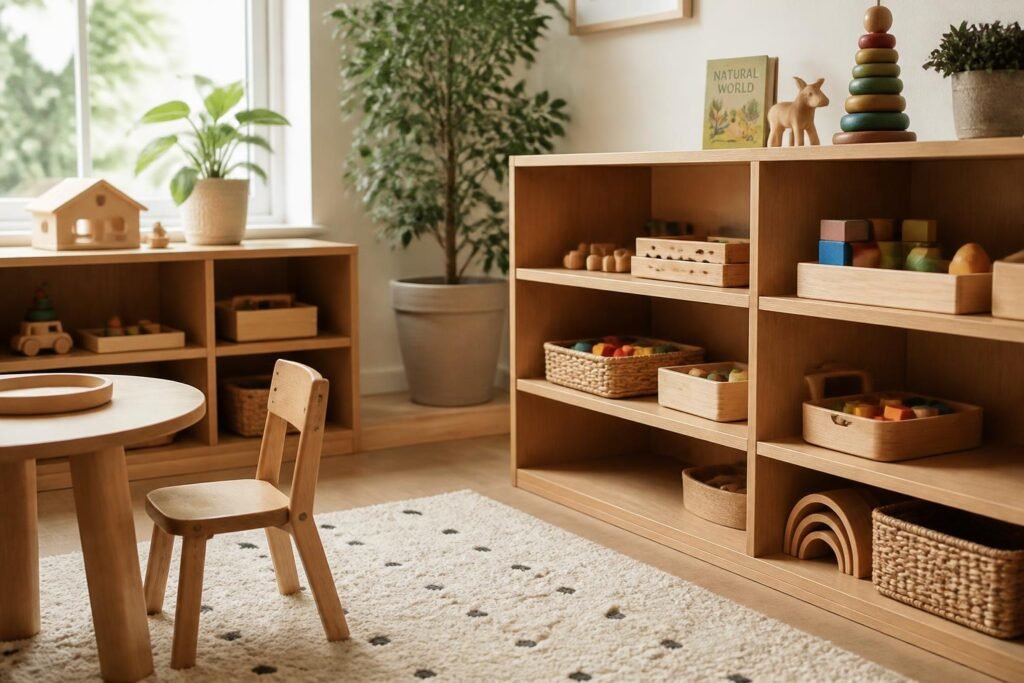
This is one reason Montessori-inspired toys have become so popular with parents. Instead of toys that simply entertain children, Montessori toys are designed to encourage independence, problem-solving, concentration, creativity, and hands-on learning.
The best Montessori toys for toddlers are often simple, purposeful, and open-ended. They give children opportunities to practice real skills while allowing them to learn at their own pace.
Whether you have a 2-year-old who is just beginning to explore independence or a preschooler who loves building, creating, and pretending, the right toys can support important areas of development.
Looking for even more educational toy ideas? Be sure to check out my complete guide to Best Educational Toys for Toddlers, where I share teacher- and mom-approved toys that support fine motor skills, language development, creativity, STEM learning, and more.
What Are Montessori Toys?
Montessori toys are inspired by the educational philosophy created by Dr. Maria Montessori, which focuses on child-led learning, independence, and hands-on exploration.
While traditional Montessori classrooms use carefully designed materials, Montessori-inspired toys for home use typically share similar qualities:
- Encourage independent play
- Allow children to explore at their own pace
- Build real-life skills
- Promote concentration and problem-solving
- Encourage creativity
- Use simple, purposeful designs
A Montessori-inspired toy does not have to be expensive or made from wood. The most important factor is that it encourages active participation instead of passive entertainment.
A toy that allows a toddler to build, sort, create, practice, and discover is often much more valuable than a toy that only pushes a button and provides an answer.
Benefits of Montessori Toys for Toddlers
Montessori toys are popular because they support many areas of early childhood development.
Encourage Independence
Many Montessori toys allow children to complete tasks on their own, helping them develop confidence and independence.
Examples include:
- Pouring activities
- Dressing boards
- Cleaning sets
- Puzzles
- Sorting activities
When toddlers successfully complete a task independently, they build confidence and a sense of accomplishment.
Strengthen Fine Motor Skills
Many Montessori toys require children to grasp, pinch, stack, thread, and manipulate objects.
These movements strengthen the small muscles in their hands and fingers, which are important for:
- Writing
- Drawing
- Using scissors
- Getting dressed
- Feeding themselves
Looking for more ways to build these skills? Check out my guide to Fine Motor Skills Activities for Toddlers, where I share easy play ideas that strengthen little hands.
Support Problem-Solving Skills
Montessori toys often allow children to experiment and figure things out independently.
A toddler completing a puzzle, stacking blocks, or matching shapes is developing early reasoning skills.
Encourage Focus and Concentration
Unlike many electronic toys, Montessori-inspired toys encourage children to slow down and focus on completing a task.
This helps toddlers practice attention span and persistence.
How to Choose the Best Montessori Toys for Toddlers
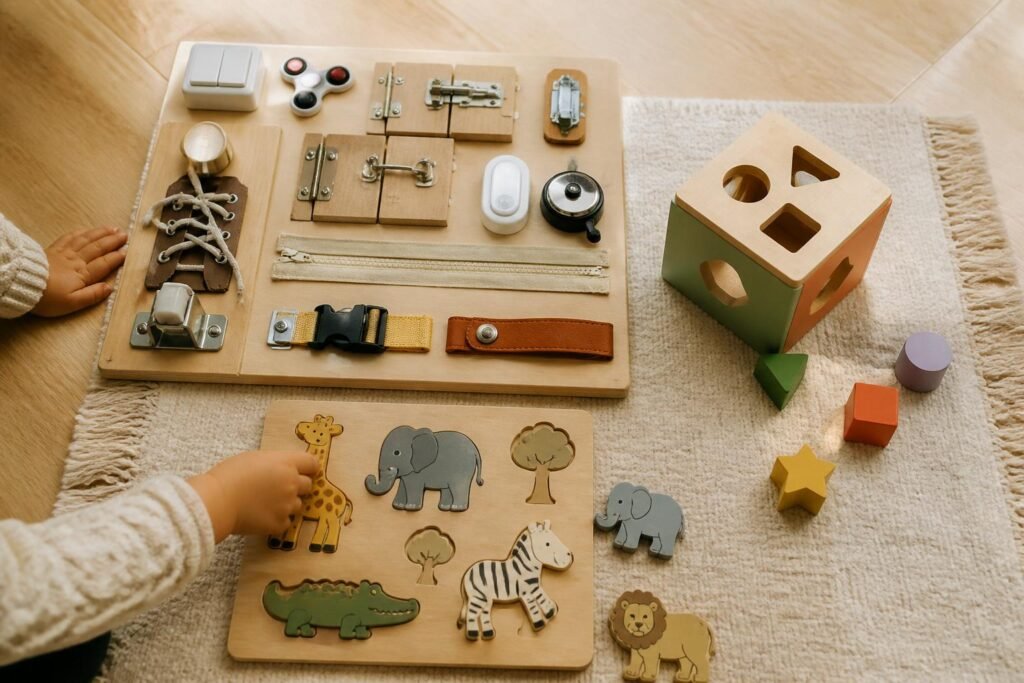
With so many options available, choosing Montessori toys can feel overwhelming.
Here are a few things I look for when choosing toys for my own children:
Choose Open-Ended Toys
Open-ended toys can be used in many different ways.
Examples:
- Wooden blocks
- Building materials
- Play silks
- Pretend play items
These toys grow with your child because their imagination determines how they are used.
Look for Hands-On Learning
The best Montessori toys encourage children to touch, move, build, sort, and explore.
Hands-on experiences create deeper learning than simply watching or pressing buttons.
Choose Toys That Match Your Child’s Stage
A great Montessori toy should provide a challenge without creating frustration.
For toddlers, look for toys that support:
- Grasping
- Matching
- Building
- Sorting
- Pretend play
- Independence
Every child develops at their own pace, so choosing toys that match your toddler’s current abilities is more important than choosing toys based on age alone. If you’re shopping for a younger toddler, my guide to Best Montessori Toys for 1-Year-Olds shares developmentally appropriate recommendations that encourage curiosity, confidence, and hands-on learning.
Montessori Toy Comparison Table
| Toy | Recommended Age | Skills Developed | Best For |
|---|---|---|---|
| Wooden Block Set | 2+ | Creativity, problem-solving | Best Overall |
| Wooden Lacing Beads | 2+ | Fine motor skills | Hand strength |
| Rainbow Stacker | 18m+ | Open-ended play | Creativity |
| Cleaning Set | 2+ | Independence | Practical life |
| Alphabet Puzzle | 2+ | Language | Early literacy |
| Magnetic Tiles | 3+ | STEM | Building |
| Shape Sorter | 18m+ | Cognitive skills | Problem-solving |
| Play Silks | 18m+ | Sensory play | Imagination |
| Play Kitchen | 2+ | Pretend play | Social development |
| Busy Board | 1–3 | Independence | Everyday skills |
| Wooden Easel | 2+ | Creativity | Art |
| Gardening Set | 2+ | Nature exploration | Outdoor learning |
| Stacking Cups | 12m+ | Early math | Budget-friendly |
| Tool Set | 3+ | Practical life | Imaginative play |
| Counting Bears | 3+ | Math & sorting | Preschool learning |
15 Best Montessori Toys for Toddlers
1. ⭐ Best Overall: Wooden Block Set
Recommended Age: 2+
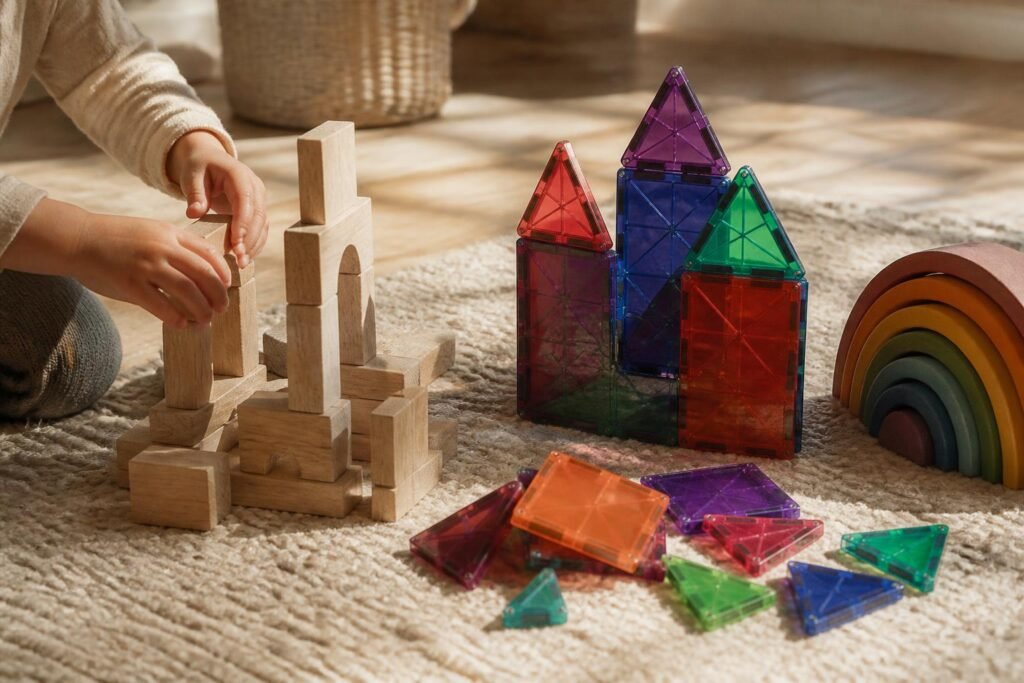
Wooden blocks are one of the best Montessori-inspired toys because they encourage endless creativity and problem-solving.
Toddlers can stack towers, build houses, create roads, and explore balance and cause-and-effect.
Skills Developed:
- Creativity
- Fine motor skills
- Spatial awareness
- Problem-solving
- Imagination
Best For: Open-ended learning and creative play
Recommended Toy: Wooden block set
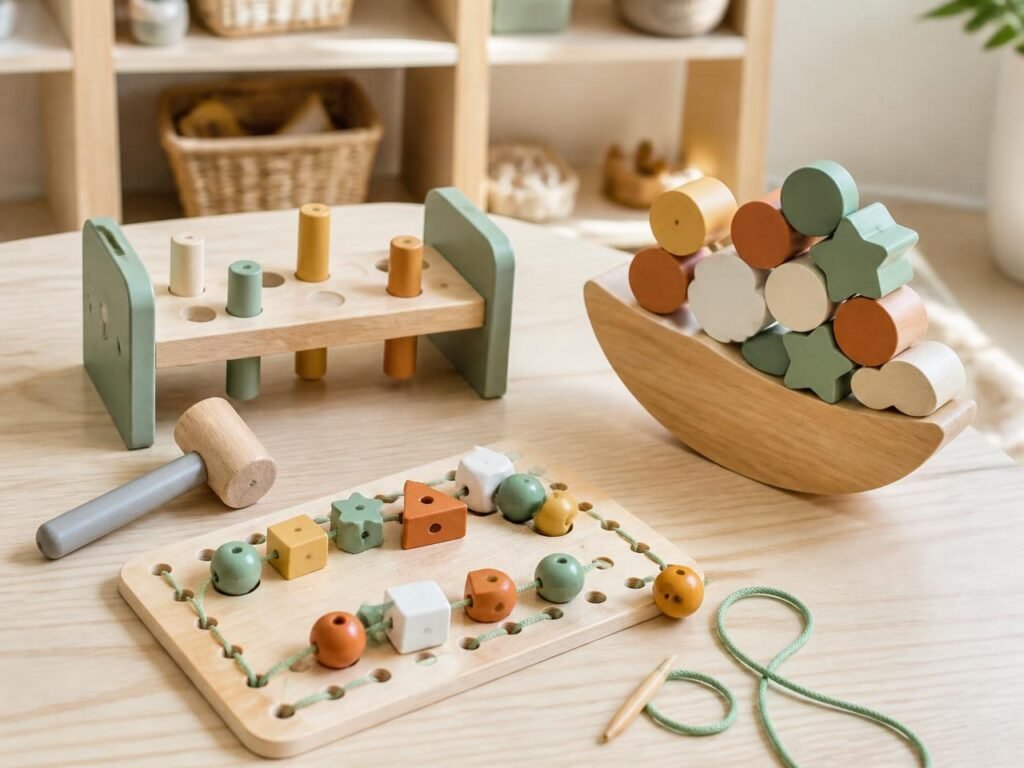
2. Best Fine Motor Toy: Wooden Lacing Beads
Recommended Age: 2+
Lacing beads are one of my favorite Montessori-inspired toys because they combine learning with hands-on practice.
Children practice threading beads onto a string, which strengthens hand muscles and improves coordination.
Skills Developed:
- Fine motor skills
- Hand-eye coordination
- Concentration
- Pattern recognition
Best For: Toddlers developing hand strength and coordination
Recommended Toy: Wooden Lacing Beads
3. Best Open-Ended Toy: Wooden Rainbow Stacker
Recommended Age: 18 months+
A wooden rainbow stacker is a beautiful example of a toy that grows with your child.
Toddlers may begin by stacking and balancing the pieces, while older children use them for imaginative play.
Skills Developed:
- Creativity
- Balance
- Problem-solving
- Imagination
Best For: Creative, open-ended play
Recommended Toy: Rainbow Stacker
4. Best Practical Life Toy: Cleaning Set
Recommended Age: 2+
Toddlers love feeling capable and included. Child-sized cleaning tools allow them to practice real-life skills while participating in family routines.
Skills Developed:
- Independence
- Coordination
- Responsibility
- Confidence
Best For: Independent play and life skills
Recommended Toy: Cleaning Set
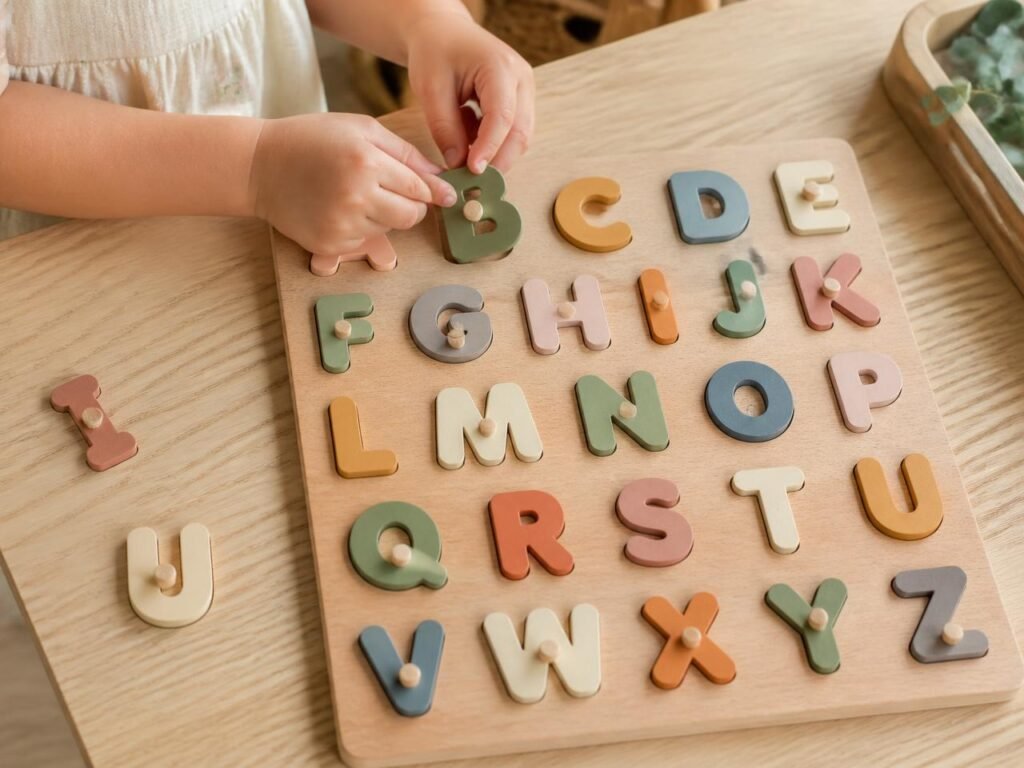
5. Best Language Development Toy: Wooden Alphabet Puzzle
Recommended Age: 2+ years
A wooden alphabet puzzle encourages letter recognition while giving toddlers opportunities to build vocabulary through play. Even before children know their letters, they enjoy matching pieces and talking about the pictures or words associated with each letter.
Skills Developed:
- Early literacy
- Vocabulary
- Fine motor skills
- Problem-solving
Best For: Early language and literacy development
Recommended Toy: Wooden Alphabet
6. Best STEM Toy: Magnetic Tiles
Recommended Age: 3+ years
Magnetic tiles are one of my favorite open-ended learning toys. While they aren’t traditional Montessori materials, they encourage many Montessori principles by allowing children to create, experiment, and solve problems independently.
Skills Developed:
- STEM learning
- Spatial reasoning
- Creativity
- Engineering skills
- Problem-solving
Best For: Creative builders and early STEM learning
Recommended Toy: Magnetic Tiles
7. Best Puzzle: Wooden Shape Sorter
Recommended Age: 18 months+
Shape sorters help toddlers recognize shapes while strengthening hand-eye coordination and problem-solving skills.
Skills Developed:
- Shape recognition
- Fine motor skills
- Problem-solving
- Hand-eye coordination
Best For: Early cognitive development
Recommended Toy: Wooden Shape Sorter
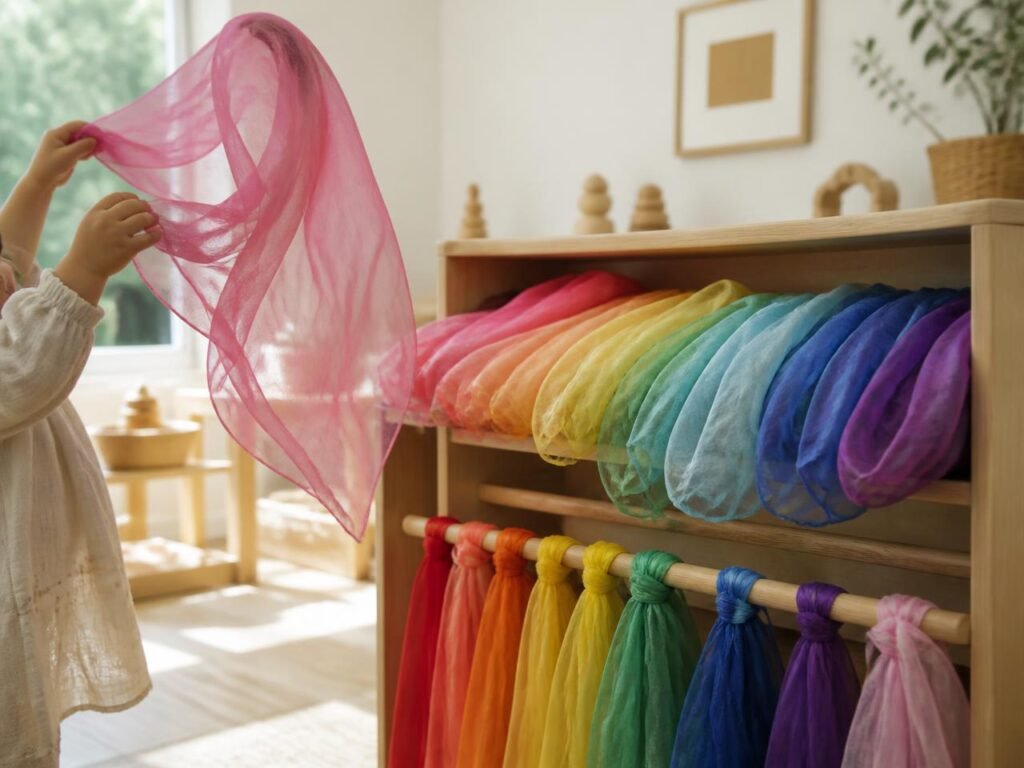
8. Best Sensory Toy: Play Silks
Recommended Age: 18 months+
Play silks are lightweight fabric squares that become anything a child imagines—a cape, blanket, picnic cloth, river, or superhero costume.
Skills Developed:
- Creativity
- Sensory exploration
- Imagination
- Pretend play
If you’re looking for even more ways to encourage sensory exploration, check out my guide to Sensory Activities for Toddlers.
Best For: Open-ended sensory play
Recommended Toy: Play Silks
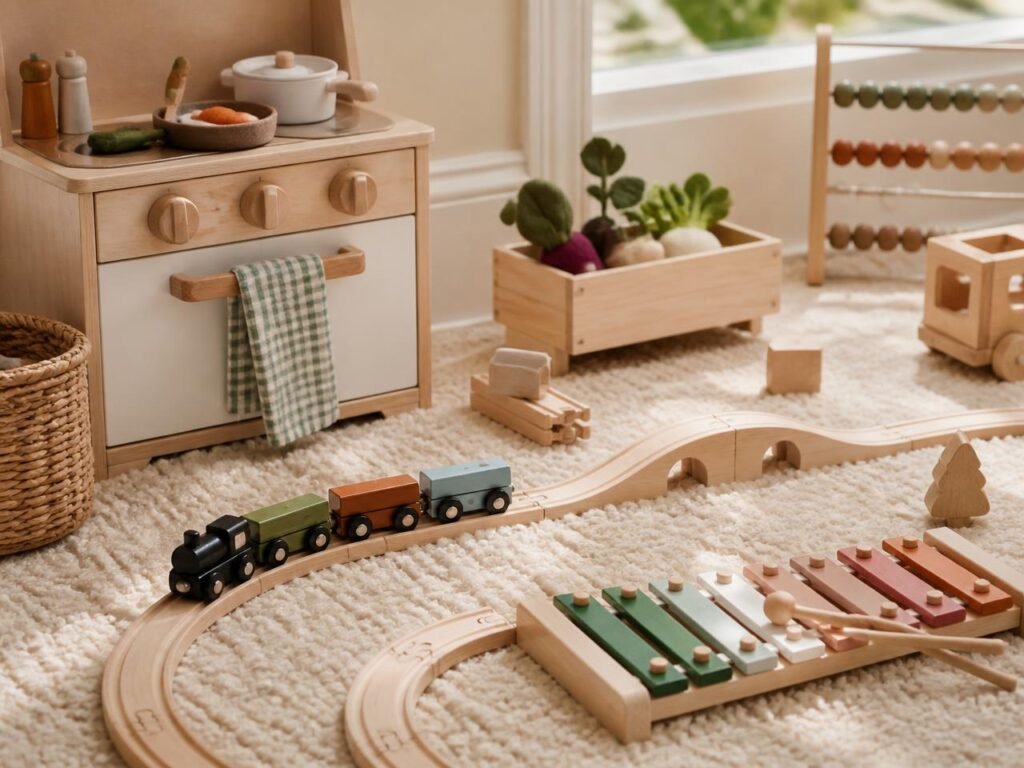
9. Best Pretend Play Toy: Wooden Play Kitchen
Recommended Age: 2+ years
Pretend kitchens encourage imaginative play while helping children practice everyday routines they observe at home.
Skills Developed:
- Social skills
- Language development
- Creativity
- Independence
Best For: Imaginative play
Recommended Toy: Wooden Play Kitchen
10. Best Independent Play Toy: Busy Board
Recommended Age: 1–3 years
Busy boards encourage toddlers to practice practical life skills by opening latches, fastening buckles, zipping zippers, and turning locks.
Skills Developed:
- Fine motor skills
- Independence
- Problem-solving
- Concentration
Best For: Independent learning
Recommended Toy: Busy Board
11. Best Art Toy: Wooden Easel
Recommended Age: 2+ years
A wooden easel gives toddlers a dedicated space to paint, draw, and create.
Skills Developed:
- Creativity
- Fine motor skills
- Self-expression
Recommended Toy: Wooden Easel
12. Best Nature Toy: Gardening Set
Recommended Age: 2+ years
Gardening introduces toddlers to nature while encouraging responsibility and observation.
Skills Developed:
- Responsibility
- Curiosity
- Fine motor skills
- Science exploration
Recommended Toy: Gardening Set
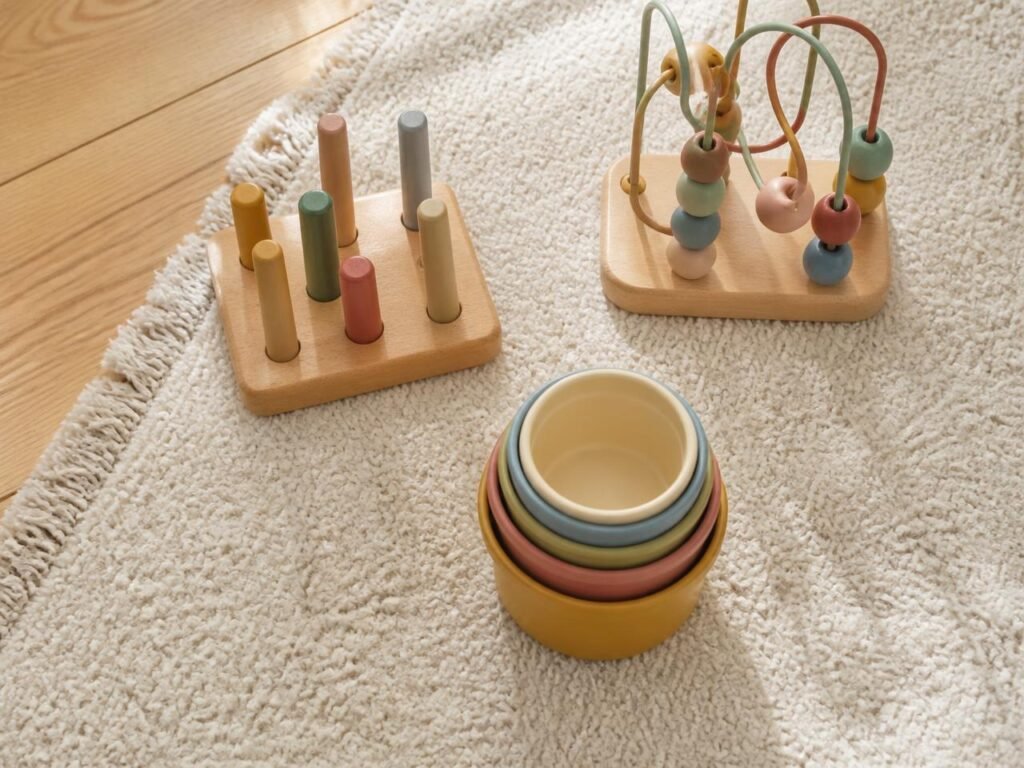
13. Best Budget Pick: Stacking Cups
Recommended Age: 12 months+
Simple stacking cups are inexpensive but incredibly versatile.
Children can stack them, nest them, sort them, pour water with them, and use them during sensory play.
Skills Developed:
- Fine motor skills
- Hand-eye coordination
- Early math concepts
Recommended Toy: Stacking cups
14. Best Practical Life Toy: Child-Sized Tool Set
Recommended Age: 3+ years
A child-sized tool set encourages toddlers to safely imitate real-life building and repair tasks.
Skills Developed:
- Coordination
- Independence
- Creativity
- Problem-solving
Recommended Toy: Tool Set
15. My Choice: Counting Bears
Recommended Age: 3+ years
Counting bears are one of my favorite educational toys because they can be used in so many different ways.
Children can sort by color, count, create patterns, practice one-to-one correspondence, and strengthen fine motor skills using tongs.
Skills Developed:
- Early math
- Sorting
- Fine motor skills
- Pattern recognition
Best For: Early math learning
Recommended Toy: Counting Bears
Frequently Asked Questions
What are Montessori toys?
Montessori toys are designed to encourage hands-on, child-led learning. They are typically simple, purposeful, and help children develop practical skills through exploration and independent play.
What are the best Montessori toys for a 1-year-old?
Many Montessori-inspired toys are designed to support the skills toddlers are developing during their first years, including fine motor skills, coordination, problem-solving, and independence. For younger toddlers, it’s important to choose toys that match their developmental stage and encourage safe exploration.
For more age-specific recommendations, explore my guide to Best Montessori Toys for 1-Year-Olds, where I share toy ideas that support early learning, curiosity, and independent play.
Are Montessori toys worth buying?
Many Montessori-inspired toys are worth the investment because they are open-ended and can often be used in multiple ways as your child grows.
Do Montessori toys have to be made of wood?
No. While many Montessori-inspired toys are wooden, the material is less important than the toy’s purpose. A well-designed toy that encourages creativity, independence, and exploration can support Montessori principles regardless of whether it’s made of wood or another durable material.
What age should children start using Montessori toys?
Many Montessori-inspired toys can be introduced around 12 months, provided they are age-appropriate and used with supervision. As children grow, you can gradually introduce more challenging toys that match their developmental stage.
Are Montessori toys better than electronic toys?
Many parents choose Montessori-inspired toys because they encourage active participation rather than passive entertainment. Instead of lights and sounds leading the play experience, children use their own creativity, problem-solving skills, and imagination.
Final Thoughts
The best Montessori toys for toddlers don’t need to be flashy or complicated. In my experience as both a mom and a former elementary teacher, the toys children return to again and again are the ones that invite them to build, create, imagine, and solve problems on their own.
Rather than filling your home with dozens of toys, focus on choosing a few high-quality, open-ended options that encourage meaningful play and grow with your child. A thoughtfully selected toy can provide years of learning opportunities while supporting important developmental skills like creativity, independence, language, fine motor development, and problem-solving.
Continue Exploring Learning Through Play
Looking for more teacher- and mom-approved toy recommendations? These guides can help you find the best toys for every stage of your child’s development:
- Best Educational Toys for Toddlers
- Best Montessori Toys for 1-Year-Olds
- Fine Motor Skills Activities for Toddlers
- Sensory Activities for Toddlers
Each guide is filled with practical recommendations and simple ways to encourage learning through play at home.
Learning through play doesn’t have to be complicated. Sometimes, the simplest toys inspire the biggest discoveries.