↓ Jump to How to Encourage Independent Play
↓ Jump to the Best Toys for Independent Play
If you’ve ever wondered how to get your toddler to play independently for more than five minutes, you’re definitely not alone.
Toddlers are naturally drawn to their parents, and sometimes it can feel like the second you sit down, your child needs you to play, help, find something, or simply be right next to them.
But independent play is an important skill that children can gradually develop—and play is one of the best ways to encourage it.
As a mom and former elementary teacher, I’ve seen how valuable it can be for children to have opportunities to explore, create, and figure things out on their own. I also know that independent play doesn’t mean expecting a toddler to disappear into their room and entertain themselves for an hour.
For toddlers, independent play can start with just a few minutes of focused play while you are nearby.
The goal isn’t to keep your child occupied. It’s to help them become comfortable exploring their own ideas, making choices, and enjoying play without needing an adult to direct every moment.
In this guide, I’ll share simple ways to encourage independent play in toddlers, including the types of toys and activities that can make it easier.
What Is Independent Play?
Independent play is when a child plays, explores, or interacts with toys and materials without an adult actively directing the play.
That doesn’t mean your child has to be completely alone.
You can be in the same room, folding laundry, making dinner, working, or simply sitting nearby while your toddler plays.
For young children, independent play might look like:
- Building a tower with blocks
- Looking through books
- Completing a puzzle
- Creating with magnetic tiles
- Playing with play dough
- Pretending with toy animals
- Drawing or coloring
- Sorting objects
- Exploring a sensory bin
The important part is that your child is taking the lead.
Why Is Independent Play Important for Toddlers?
Independent play gives toddlers opportunities to practice skills that are difficult to develop when an adult is constantly directing the activity.
Problem-Solving
When your child is playing independently, they have opportunities to figure things out themselves.
A block tower falls.
A puzzle piece doesn’t fit.
A bridge won’t stay standing.
Instead of immediately stepping in, you can give your child a chance to experiment.
Creativity
Independent play allows children to decide what they want to create and how they want to play.
There isn’t necessarily a right answer.
A pile of blocks can become a house, a castle, a garage, or absolutely nothing you recognize—and that’s okay!
Confidence
When toddlers discover that they can figure something out on their own, it can build confidence.
Even small accomplishments matter.
“I did it!”
“I made a tower!”
“I found it!”
Those moments help children see themselves as capable learners.
Attention and Focus
Independent play also gives children opportunities to practice staying with an activity.
This is especially valuable in a world where children are surrounded by constant entertainment.
Simple, open-ended play can encourage toddlers to slow down and become absorbed in what they’re doing.
How to Encourage Independent Play
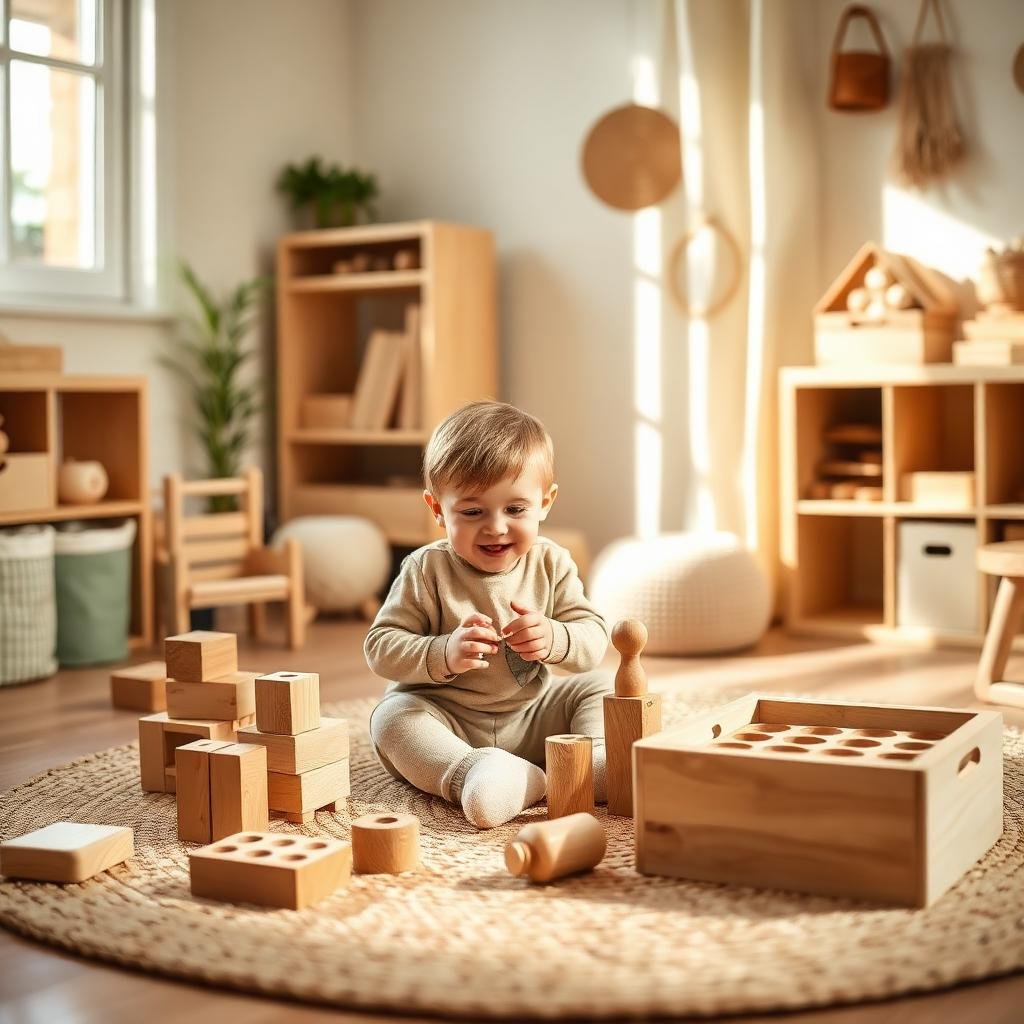
The good news is that you don’t have to completely change your toddler’s routine to encourage independent play.
Small changes can make a big difference.
1. Start With Short Periods of Independent Play
Don’t expect your toddler to suddenly play independently for an hour.
Start small.
Try five minutes.
Then ten.
As your child becomes more comfortable, you can gradually increase the amount of time.
If your toddler comes to you after two minutes, that’s okay. You can gently encourage them to return to what they were doing.
The goal is progress—not perfection.
2. Start by Playing Together
One of my favorite ways to encourage independent play is to start the play with your child.
Sit down and build a few blocks together.
Make a little pretend-play setup.
Start a puzzle.
Read a book.
Then, instead of continuing to direct every step, slowly step back.
You might say:
“I’m going to sit right here while you finish your tower.”
This gives your child the security of knowing you’re nearby while allowing them to take over the play.
3. Choose Open-Ended Toys
Open-ended toys are especially helpful for independent play because they don’t have just one way to use them.
Some of my favorite examples include:
- Blocks
- Magnetic tiles
- Play dough
- Wooden animals
- Pretend-play toys
- Art supplies
- Building toys
- Puzzles
A toy with one specific function may keep a child entertained for a few minutes, while an open-ended toy can inspire many different types of play.
For more ideas, check out my guide to Best Educational Toys for Toddlers.
4. Keep Fewer Toys Available
Sometimes more toys actually make independent play harder.
When a toddler has an entire room filled with toys, they may move from one thing to another without becoming deeply engaged.
Try putting some toys away and leaving a smaller selection available.
You might have:
- A basket of blocks
- A few puzzles
- Several books
- A pretend-play set
- Art materials
You can rotate toys every few days or weeks to make old toys feel new again.
5. Create a Simple Play Invitation
You don’t always have to tell your toddler exactly how to play.
Instead, create an inviting setup.
For example:
Put a few toy animals next to blocks.
Your toddler might build a zoo.
Place play dough next to cookie cutters.
Your child might make pretend cookies.
Put magnetic tiles next to small toy cars.
Your child might build a garage.
This gives your toddler a starting point without telling them what the finished product should look like.
6. Use Books to Encourage Independent Play
Books are one of the easiest ways to encourage quiet, independent play.
Your toddler might:
- Look at pictures
- Turn pages
- Point to objects
- Name animals
- Repeat familiar phrases
- “Read” the story to themselves
My boys absolutely love books, and I’ve found that familiar favorites are often the ones they want to look through again and again.
You don’t always have to sit and read every page for a book to be valuable.
Sometimes simply having a basket of favorite books available gives your child an opportunity to explore them independently.
For more ideas about supporting communication through play, check out Language Development Activities for Toddlers.
7. Give Your Toddler Choices
Giving toddlers choices can help them become more involved in their own play.
Instead of saying:
“What do you want to do?”
which can sometimes feel overwhelming, try offering two choices.
“Do you want to build with blocks or do a puzzle?”
“Do you want to color or play with play dough?”
Once they choose, let them take the lead.
This simple approach gives your toddler some control over their play.
8. Don’t Jump In Too Quickly
This one can be difficult!
When your toddler is struggling with something, your first instinct may be to help.
But sometimes it’s worth pausing.
If a puzzle piece doesn’t fit, instead of immediately showing your child where it goes, try asking:
“Where do you think it might fit?”
Or:
“What could we try?”
You’re still supporting your child, but you’re giving them an opportunity to solve the problem themselves.
9. Make Independent Play Part of Your Routine
Independent play doesn’t have to be a special activity.
It can become part of your everyday routine.
For example:
Morning:
10 minutes of independent play while you get breakfast ready.
Afternoon:
Books or puzzles while you complete a household task.
Quiet time:
Open-ended toys while you have a few minutes to yourself.
When independent play becomes a normal part of the day, it can become easier for your toddler to accept.
Best Toys for Independent Play
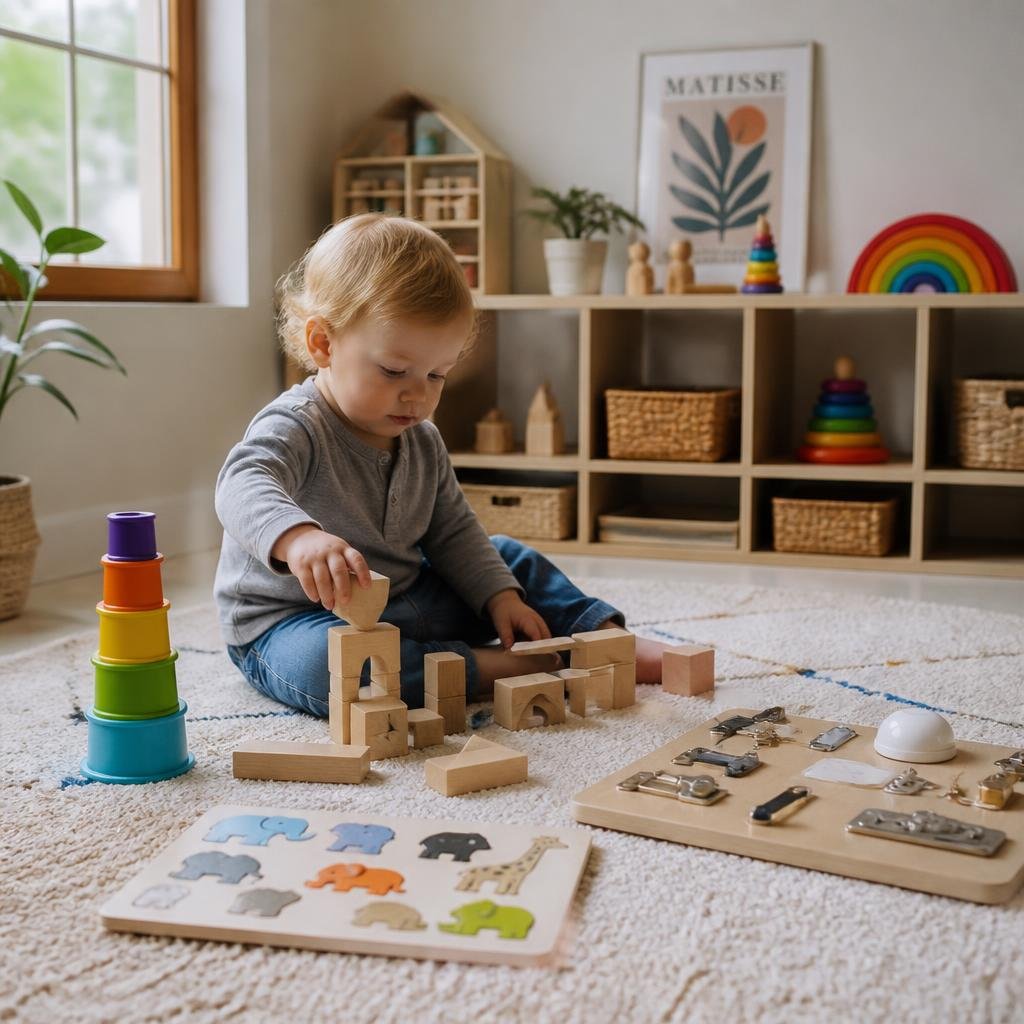
The toys you choose can make a big difference.
When looking for independent play toys, I recommend choosing toys that encourage children to make decisions, create, experiment, and play in multiple ways.
Blocks
Blocks are one of my favorite choices because toddlers can build something different every time.
Skills: creativity, spatial awareness, problem-solving, fine motor skills
Magnetic Tiles
Magnetic tiles are another great open-ended option.
Toddlers can build towers, houses, garages, animals, and whatever else they can imagine.
Skills: creativity, engineering, spatial reasoning
You can also read my guide to Easy STEM Activities for Toddlers for more hands-on STEM ideas.
Puzzles
Age-appropriate puzzles give toddlers a goal while still allowing them to work through the challenge themselves.
Skills: problem-solving, concentration, spatial awareness
Play Dough
Play dough is wonderful for open-ended play because there isn’t one correct thing to make.
Skills: creativity, fine motor skills, imagination
For more activities that strengthen little hands, check out Fine Motor Skills Activities for Toddlers.
Pretend-Play Toys
Pretend play can keep toddlers engaged because they can create their own stories and scenarios.
↓ Here are some of my favorites ↓
Skills: imagination, language, social-emotional development
What If My Toddler Doesn’t Want to Play Independently?
Don’t worry if your toddler doesn’t immediately love independent play.
Some children need more support than others.
Start with very short periods and stay nearby.
You can also begin by playing together and gradually becoming less involved.
Remember that independent play is a skill that develops over time.
You aren’t failing if your toddler wants you nearby.
The goal isn’t to force independence. It’s to give your child repeated opportunities to experience the enjoyment and confidence that comes from playing on their own.
How Much Independent Play Should a Toddler Have?
There isn’t one perfect amount of independent play that every toddler needs.
Every child is different.
Instead of focusing on a specific number of minutes, look for opportunities throughout the day.
Even 5–10 minutes of independent play can be a great starting point for a toddler who is used to constant adult interaction.
As your child becomes more comfortable, those periods may naturally become longer.
Frequently Asked Questions About Independent Play
What age should a child start independent play?
Toddlers can begin practicing independent play from a young age. The amount of time they can comfortably play independently will vary depending on their age, temperament, interests, and development.
Start with short periods and gradually build from there.
How do I encourage my toddler to play independently?
Start by playing with your toddler, then gradually step back while staying nearby. Offer open-ended toys, limit distractions, provide simple choices, and give your child time to explore without immediately stepping in.
What are the best toys for independent play?
Open-ended toys such as blocks, magnetic tiles, puzzles, play dough, books, pretend-play toys, and art materials can all encourage independent play.
Is independent play good for toddlers?
Yes. Independent play gives toddlers opportunities to explore their interests, make choices, practice problem-solving, develop creativity, and build confidence.
Should I leave my toddler alone to play?
Independent play doesn’t necessarily mean leaving your toddler alone. For young children, it can happen while you are nearby and available. Always choose activities and toys that are appropriate for your child’s age and supervise when needed.
Final Thoughts
Independent play doesn’t mean your toddler never needs you.
In fact, I think one of the most important things I’ve learned as both a mom and a teacher is that independence grows from feeling secure and supported.
You can be nearby while your child builds a tower.
You can start a pretend-play activity and then let your child take over.
You can sit beside them while they work on a puzzle.
And you can give them the space to figure things out without always jumping in with the answer.
The goal isn’t to create a toddler who can entertain themselves all day.
It’s to give your child opportunities to discover, create, explore, and experience the confidence that comes from saying, “I can do this myself.”
And that’s one of the things I love most about learning through play.
For more play-based learning ideas, check out:
- Best Educational Toys for Toddlers
- 15 Best Montessori Toys for Toddlers
- 10 Best Montessori Toys for 1-Year-Olds
- Fine Motor Skills Activities for Toddlers
- Language Development Activities for Toddlers
- Sensory Activities for Toddlers
- Easy STEM Activities for Toddlers